DOM Tenerife · Insight
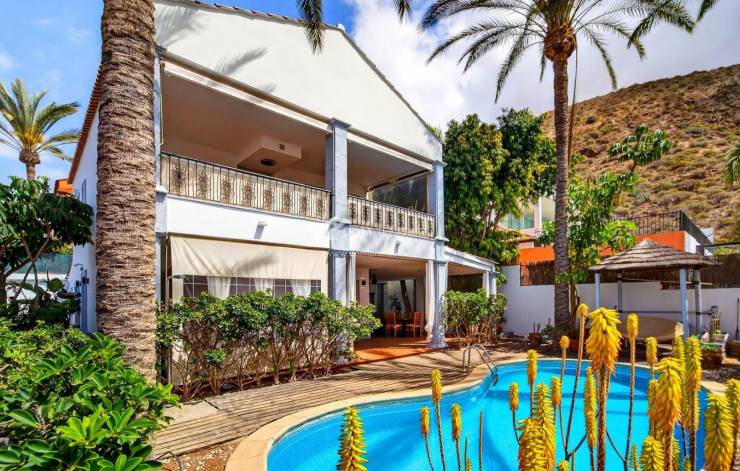
The south of Tenerife has emerged as a substantial market for high-net-worth acquisition of standalone villas and coastal chalets. This guide addresses the legal, fiscal and practical frameworks governing purchase in Costa Adeje, El Duque, La Caleta, Abama, El Madroñal and Playa Paraíso.
Acquisition of luxury chalets in Tenerife South attracts predominantly Northern and Central European buyers, alongside substantial interest from the United Kingdom and established investor cohorts from Eastern Europe. These purchasers typically acquire for mixed-use purposes: personal residence, seasonal occupation, and rental yield within the managed tourism sector. Demand from Scandinavian and Alpine jurisdictions has remained consistent; UK interest reflects both direct personal use and portfolio diversification. The market for standalone villas in El Madroñal and beachfront chalets in Abama has demonstrated steady appreciation over recent years, responding to both currency movements and the scarcity of developable seafront land. Transaction volume among this buyer class suggests enduring confidence in the regulatory framework and property security offered by the Canary Islands’ legal system. Enquiry patterns indicate buyers increasingly conduct multi-jurisdictional comparisons before committing; the availability of full document verification and multilingual legal accompaniment has become a material selection criterion.
Discover the development in detail
Floor plans, specifications and current availability, sent by one of our advisors in your language.
See the developmentWhatsAppBeachfront chalets and villas with unobstructed sea views command the highest valuations; properties in Abama, Bahía del Duque and the coastal reaches of El Madroñal typically range between €2,500,000 and €8,000,000 depending on land area, construction age and direct beach access. First-line penthouses and elevated apartments overlooking the Atlantic, concentrated in Costa Adeje and La Caleta, trade between €800,000 and €2,200,000. Second-line apartments with partial sea views or golf course orientation in El Madroñal and Golf del Sur occupy the €400,000 to €950,000 band. Ground-floor townhouses with private gardens in gated developments trade from €500,000 upwards. Rental-yielding studios and one-bedroom units in secondary locations begin at €250,000. These ranges reflect current market conditions; individual valuations depend critically on notarised plot area, registered construction year, and compliance with local urbanistic classifications.
Every property must be verified against the Catastro (Spanish Land Registry) for plot dimensions, recorded construction dates and registered use classification. Urbanistic status—whether in consolidated resort zones (Costa Adeje, Abama) or planned residential communities (El Madroñal)—affects resale liquidity and future renovation rights. Community obligations (cuota de comunidad) are binding and non-negotiable; these cover common-area maintenance, security, landscaping and utilities. Obtain current statements from the community administrator detailing arrears, planned works and reserve-fund status. Physical inspection must verify that registered square metres align with measured space; façade condition, roof integrity, plumbing and electrical systems must be assessed independently—photographs and vendor claims provide no legal protection. Request sight of the last energy audit (Certificado de Eficiencia Energética), building permission (licencia de obra), and completion certificate (Cédula de Habitabilidad) where applicable. Properties without full documentation history require specialist legal review before offer.
Property purchase in Spain incurs either IVA (Value Added Tax, typically 10% for new builds) or ITP (Property Transfer Tax, varying by community but approximately 6–7% for resale). New works registered with the relevant town hall (Ayuntamiento) within five years of completion may qualify as obra nueva; older or non-registered properties are taxed as segunda mano. Municipal capital gains tax (plusvalía municipal) applies on resale and is calculated by the town council. Annual ownership tax (IBI—Impuesto sobre Bienes Inmuebles) is assessed on registered cadastral value and payable to the municipality. Non-resident sellers face mandatory 3% withholding at point of sale (deducted before transfer of funds), which must be reported via modelo 211 form to the Spanish Tax Authority (Agencia Tributaria). Rental income from holiday lets requires quarterly VAT and income tax filing. Full pre-purchase tax projection is essential; do not rely on vendor estimates.
Never release reservation funds (señal) without a formal, legally binding reservation agreement (contrato de reserva) signed by both parties and the agent. Do not assume that vendor-supplied translation of the property deed (escritura) is accurate; commission an independent legal translation. Underestimating community charges (cuota de comunidad) is a material error; request three years’ statements and confirm whether charges will rise due to planned works. Ignore property orientation only at risk: south-facing chalets in coastal zones command premium rental rates; north-facing units in shaded locations experience lower demand and may carry cooling costs. Avoid viewing properties at night, when structural defects, flood risk, noise from adjacent roads or venues are concealed. Do not exchange large sums before notary appointment is confirmed. Failure to verify that the seller holds full registered ownership (titularidad) can invalidate purchase. Never proceed without sight of the Nota Simple from the Registro de la Propiedad (Property Registry extract).
DOM Tenerife conducts full legal verification of title, cadastral status, community records and compliance documentation before any commitment. All deeds, surveys and contracts receive professional legal translation into English by a qualified translator; originals are cross-checked against Registry extracts. A multilingual lawyer accompanies you through every notary appointment, ensuring comprehension of terms and obligations. NIE (foreigner identification number) applications are managed on your behalf; Spanish bank account opening is coordinated prior to funds transfer. The notary (Notaría) verifies seller identity, reviews all documents, calculates and reports taxes, and witnesses signature of the final deed (escritura pública). Post-completion, the new deed is registered at the Property Registry (Registro de la Propiedad); this typically takes 4–8 weeks. IBI registration transfers to your name; community administrator is notified of change of ownership. Full file documentation is delivered to you in English-language summary form. Our commitment to ’Buy safely’ means transparent process, verifiable facts, and expert support from offer to keys.
High-net-worth individuals from Northern Europe, Central Europe, the United Kingdom and Eastern Europe dominate the market. Most acquire for mixed use: personal residence, seasonal occupation and rental yield. Demand from Scandinavian and Alpine buyers has remained consistent over recent years, reflecting both direct portfolio strategy and confidence in Canary Islands legal protections.
Beachfront chalets with sea views in Abama and El Madroñal range €2.5M–€8M. First-line penthouses in Costa Adeje and La Caleta trade €800k–€2.2M. Second-line apartments with partial views in El Madroñal and Golf del Sur occupy €400k–€950k. Ground-floor townhouses with gardens begin at €500k. Ranges depend on plot area, construction age and registered use classification.
Verify plot dimensions, construction date and use classification against the Catastro (Land Registry). Confirm urbanistic status within your zone. Obtain community statements showing charges, arrears and planned works. Inspect measured square metres against registered area. Request energy audit, building permission and completion certificate. Properties lacking full documentation require specialist legal review.
New builds incur IVA (approximately 10%); resale properties incur ITP (approximately 6–7%). Annual IBI tax applies to all owners based on cadastral value. Non-resident sellers face 3% withholding at sale. Municipal capital gains tax (plusvalía) applies on resale. Rental income requires quarterly VAT and income tax filing. Obtain full tax projection before purchase.
Releasing reservation funds without a signed contract; relying on vendor translations; underestimating community charges; ignoring property orientation; viewing only in daylight; exchanging funds before notary appointment; failing to verify registered ownership; proceeding without a Nota Simple from the Property Registry. Each represents material risk.
We conduct full legal verification of title, cadastral status and compliance. All documents receive professional legal translation into English. Multilingual lawyers accompany you through notary appointments. NIE and bank arrangements are coordinated on your behalf. Post-completion, we deliver full English-language summary documentation. Our ’Buy safely’ commitment means verifiable facts and expert support from offer to keys.
Purchasing a luxury chalet in Tenerife South requires meticulous legal verification, accurate tax counsel and multilingual accompaniment at every stage. DOM Tenerife Real Estate combines local knowledge of Costa Adeje, El Duque, La Caleta, Abama, El Madroñal, Playa Paraíso and Golf del Sur with full document verification, legal translation and notarial support. We escort you safely through NIE application, bank account opening, tax reporting and post-completion registry matters. Contact us via WhatsApp +34 673 560 035 to discuss your acquisition with a senior agent who speaks your language and knows these streets.
Let’s talk whenever suits you
Video call, a meeting at our El Madroñal office, or WhatsApp on +34 673 560 035. We guide you from reservation to deed, in your language. DOM Tenerife — Buy safely.
Request informationMessage on WhatsApp#chalet de lujo en tenerife # tenerife luxury real estate # dom tenerife # south tenerife property # hnwi tenerife buyer
Phone
+34 922 089 199Mobile and whatsapp
+34 673 560 035
Address
Avenida Kurt Konrad Mayer 63, El Madroñal, 38660 Adeje, Santa Cruz de Tenerife, España.