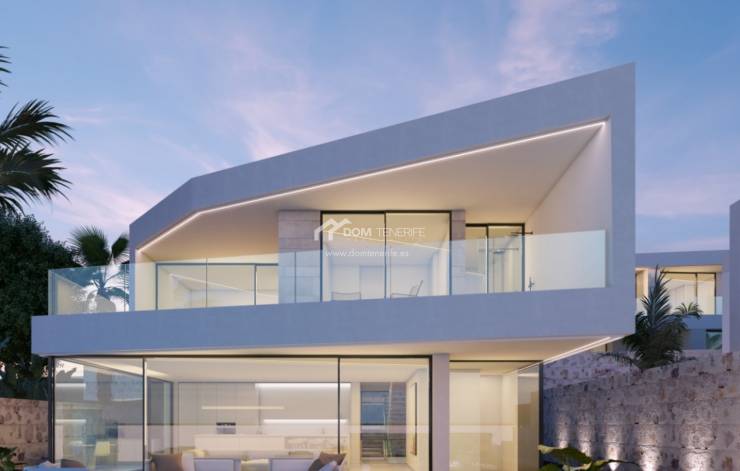
DOM Tenerife · Buyer insight
Chayofa has emerged as a distinct choice for international property buyers in southern Tenerife, offering hillside positioning and residential character that distinguish it from the beachfront intensity of nearby Los Cristianos. Understanding the residential profile, price hierarchy, legal framework and procedural safeguards is essential before committing capital to property in this zone.
Buyers acquiring property in Chayofa and the broader south Tenerife market represent established purchasing power from Northern Europe, Central Europe, the United Kingdom and elsewhere internationally. These acquisitions are typically owner-occupied residences or investment holdings rather than speculative transactions. The buyer cohort has evolved from primarily northern European retirees toward a mixed demographic including younger professionals, remote workers and portfolio diversification investors. Demand patterns reflect shifts in work location flexibility and a preference for year-round subtropical climate access without the compressed density of immediate oceanfront neighbourhoods. Transaction frequency and inquiry origins suggest sustained interest from Nordic countries, France, Belgium and the UK, though individual motivations—tax residence planning, family relocation, portfolio stability—remain highly personal. The market has matured toward informed acquisition practices, with buyers increasingly engaging legal and fiscal advisors before commitment.
Chayofa residential stock encompasses three broad categories aligned with hillside topography and distance from immediate amenities. Standalone villas with southern exposure and sea views command the highest asking prices, typically featuring private pools, multiple floors and independent positioning. Mid-tier apartments in low-rise buildings occupy the price tier below, often featuring terraces and partial views. Ground-floor and second-level apartments without sea views occupy the entry tier, positioned closer to local shops and immediate services. Price gradients are qualitative rather than formulaic and reflect individual property condition, orientation, plot size and view quality. No single price range applies uniformly; comparative analysis requires direct review of current inventory. DOM Tenerife currently lists 14 homes for sale in the nearby reference zone Los Cristianos, ranging from €239,000 to €1,790,000 (median €957,600), providing context for the broader market structure. Direct consultation with our advisors identifies specific Chayofa properties within your parameters.
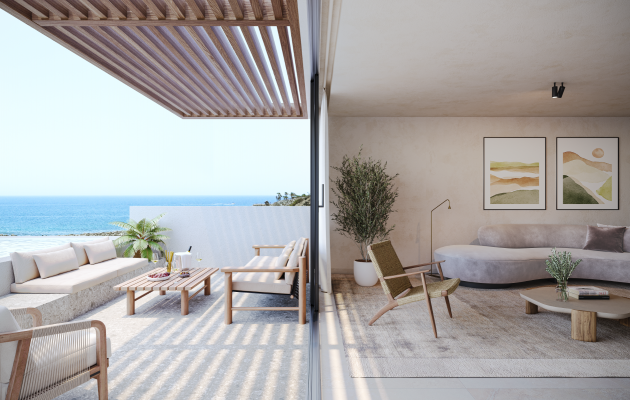
ICONIC Tenerife · Fase 3
New development selected by DOM Tenerife. Plans, prices and availability sent the same day.
Explore the developmentBefore acquisition, verify the property’s cadastral registration (catastro), urban planning classification and any outstanding charges or liens against title. The land registry (Registro de la Propiedad) contains the definitive ownership record; discrepancies with cadastral records must be resolved prior to notarisation. Community fees (cuota de comunidad), if applicable, require review of meeting minutes, outstanding debts and planned maintenance to avoid inheriting unpaid obligations. Physical inspection must occur during daylight hours, assessing actual condition of installations—plumbing, electrics, cooling systems, communal areas—rather than relying on photography alone. Structural reports, where significant renovation is evident, clarify whether work was permitted and properly certified. Moisture, cladding integrity and roof condition are frequently underestimated in photographs. Professional surveying and a site visit at multiple times of day reveal exposure, noise patterns and practical utility that images cannot communicate.
Purchase taxation in the Canary Islands depends on the property classification. Resale homes are subject to transfer tax (ITP) at a general rate of 6.5%. New-build homes sold directly by the developer incur IGIC at 7% plus stamp duty (AJD) on the deed. Annual property tax (IBI) is municipal and modest by European standards. When the seller is a non-resident of Spain, the buyer must withhold 3% of the purchase price and remit it to the Spanish Tax Agency (Agencia Tributaria) via form 211 within one month; failure to withhold does not extinguish the obligation—it transfers liability to the buyer. Municipal property gain tax (plusvalía municipal) applies when a non-resident sells; rates and calculation methods vary by municipality. A fiscal advisor (gestor) should review your specific transaction to confirm applicable rates and filing requirements before completion.
Avoid paying a reservation deposit (señal) without a signed, legally binding reservation agreement specifying price, conditions and timeline. Do not assume that a translated copy of the deed is equivalent to a certified legal translation; Spanish property law requires precise interpretation by a qualified translator. Underestimating community fees or deferring review of community finances often creates post-purchase disputes or unexpected assessments. Neglecting property orientation when viewing during bright afternoon hours masks noise, afternoon solar gain and neighbouring building shadows. Night-time or dawn visits reveal ambient noise and lighting conditions that daytime inspections obscure. Proceeding without an independent legal advisor to review the title, survey conditions and contractual terms exposes you to undisclosed encumbrances, boundary disputes or misaligned expectations. Treating the purchase as a transaction rather than an advisory process increases risk substantially.
DOM Tenerife provides end-to-end legal and documentary support throughout acquisition. We verify title completeness and absence of liens or charges, commission certified legal translation of the deed and all ancillary documents, and accompany you to the notary (notario) to ensure contractual terms are clearly understood before signature. Post-completion, we guide your fiscal registration (NIE requirement, tax identification, municipal inscription) and liaise with your bank, the tax authority and local authorities on your behalf. Many international buyers do not require Spanish residency to purchase; an NIE (foreigner identification number) suffices for ownership and tax filing. Our multilingual support eliminates communication gaps and clarifies obligations in your native language. This accompaniment—from initial document review through registry inscription and tax filing—reduces procedural error and ensures compliance with Spanish property law, tax law and local municipal requirements.
Form 211 is the Spanish Tax Agency’s document for withholding 3% of the purchase price when the seller is a non-resident. You, the buyer, must withhold this amount and remit it within one month of completion. Failure to withhold transfers the tax liability to you personally, even if the notary processes the deed.
ITP (transfer tax) applies to resale homes at 6.5% in the Canary Islands. IGIC (value-added tax) applies to new-build homes sold directly by the developer at 7%, plus stamp duty on the deed. Your property type determines which tax applies; your fiscal advisor will confirm which before completion.
No. You need an NIE (foreigner identification number) for ownership and tax purposes, but Spanish residency is not required. The NIE is obtained through the Spanish National Police and is a prerequisite for notarisation and bank transfer approval.
No. Always insist on a signed, legally binding reservation agreement specifying the price, conditions, timeline and refund terms before releasing any money. A verbal agreement or handshake offers no legal protection and may result in loss of funds.
No. Spanish property law requires a certified legal translation by a qualified professional translator. A casual translation or machine translation is not legally valid and may mask critical clauses, charges or conditions. Always commission a certified translator.
You may inherit unpaid community debts, which become your personal liability upon completion. Community meetings minutes, payment records and planned maintenance budgets must be reviewed and understood before acquisition to avoid unexpected assessments or liens.
Daytime visits during bright afternoon hours mask ambient noise, afternoon heat gain, neighbouring shadows and street activity. Night-time visits reveal actual noise levels, lighting conditions and the character of the neighbourhood, ensuring you understand the property’s real daily environment.
We verify title completeness, arrange certified legal translation, accompany you through notarisation, guide your tax registration and NIE application, and liaise with your bank, the tax authority and municipal authorities post-completion. This eliminates communication gaps and ensures full legal and tax compliance throughout the acquisition.
Acquiring property in Chayofa or elsewhere in southern Tenerife involves navigating Spanish property law, Canary Islands taxation, municipal administration and notarial procedure. DOM Tenerife’s commitment to ’Buy safely’ means full document verification, certified legal translation, notarial accompaniment and post-purchase tax and administrative support in your native language. Contact us via WhatsApp +34 673 560 035 to discuss your property requirements and receive personalised guidance from our advisors.
Let’s talk whenever suits you
Video call, a meeting at our El Madroñal office, or WhatsApp on +34 673 560 035. We guide you from reservation to deed, in your language. DOM Tenerife — Buy safely.
Request informationMessage on WhatsApp#propiedades en chayofa # tenerife luxury real estate # dom tenerife # south tenerife property # hnwi tenerife buyer
Phone
+34 922 089 199Mobile and whatsapp
+34 673 560 035
Address
Avenida Kurt Konrad Mayer 63, El Madroñal, 38660 Adeje, Santa Cruz de Tenerife, España.