DOM Tenerife · Insight
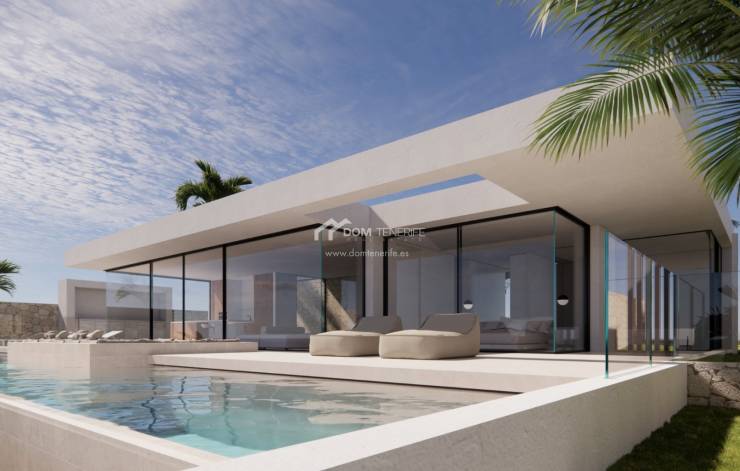
Selling a €2.5 million villa in El Madroñal requires precision across finance, law, and asset verification. This case study documents the full acquisition pathway for international high-net-worth buyers, highlighting operational standards that distinguish a regulated transaction from a failed one.
Purchasers of El Madroñal villas typically originate from Northern Europe, the United Kingdom, Central Europe, and Russia. These buyers seek second homes or portfolio diversification in a subtropical climate with low taxation and predictable legal frameworks. Demand from Nordic and UK investors has remained consistent, with Central European interest growing steadily. The demographic prioritises proximity to international schools, private healthcare, and golf facilities. Annual inquiry volume reflects sustained appetite, though competition for premium southeast-facing plots remains acute. Buyers in this segment typically commission independent surveys and legal reviews before commitment, reflecting fiduciary discipline. Price trajectory across the zone has shown steady appreciation, though seasonal fluctuations and broader currency movements create variance. Estate agents report sustained enquiry across €2–€5 million range, with turnover cycles spanning eighteen to thirty-six months.
Discover the development in detail
Floor plans, specifications and current availability, sent by one of our advisors in your language.
See the developmentWhatsApp
El Madroñal classifies into three distinct segments. Beachfront villas with sea views command premium valuations, typically ranging between €3.8 and €6.5 million depending on plot size, aspect, and amenities. First-line apartments with direct pool and sea access occupy the €1.8 to €3.2 million bracket. Second-line apartments, removed from immediate coastal views, trade between €980,000 and €1.6 million. These ranges reflect current market conditions and assume recent refurbishment or architect-certified condition. Premium positioning depends on orientation—south or southeast aspects command twenty to thirty percent premiums over north-facing properties. Lot size, privacy screening, garage provision, and proximity to shared facilities materially affect positioning within each segment. Buyer enquiries concentrate on units completed within the last decade or substantially renovated thereafter.
Every property requires full cadastral verification against official registers to confirm boundary accuracy, registered charges, and municipal zoning. El Madroñal falls under strict coastal planning regulations; documentation must confirm compliance with building codes and environmental restrictions. Examine community bylaws, management accounts, and reserve fund declarations before commitment. Physical inspection must occur in daylight and include structural assessment, plumbing integrity, electrical safety, and pool filtration systems—marketing photography does not substitute due diligence. Engage a qualified surveyor to identify latent defects, remedial costs, and maintenance backlogs. Verify that utilities connect legally to municipal supply; assess the state of common areas, parking infrastructure, and security systems. Legal title must show no pending liabilities, encroachments, or usufruct arrangements that could constrain future resale.
Purchase of a second-hand property triggers transfer tax (impuesto sobre transmisiones patrimoniales) at rates varying by community classification. First-time property buyers and principal residence purchasers may qualify for exemptions or reductions; consult fiscal counsel to establish entitlement. New construction attracts VAT (IVA) in lieu of transfer tax. Annual property tax (IBI—impuesto sobre bienes inmuebles) applies to all owners, calculated according to cadastral valuation. Vendors must file municipal capital gains documentation (plusvalía municipal) regardless of profit; non-resident sellers face three percent withholding by the notary at completion unless tax clearance is obtained. Buyers acquire title subject to these obligations; early clarification prevents post-completion disputes. International tax residency status determines reporting obligations in buyer’s home jurisdiction—obtain written guidance from a cross-border tax advisor before signing.
First, releasing deposit without a binding reservation agreement places funds at merchant risk. Second, proceeding with untranslated deeds or relying on agent translation creates contractual ambiguity and enforceability gaps. Third, underestimating community charges—request three years of audited statements to assess true annual cost. Fourth, ignoring solar orientation: north-facing properties receive limited winter sun and incur higher heating costs. Fifth, scheduling viewings only during daylight obscures natural light patterns and evening ambiance. Sixth, transferring money before full document verification invites fraud or title disputes. Mitigation requires: signed reservation terms before any payment; professional legal translation of all deeds; comprehensive community financial review; orientation assessment with a surveyor; multiple daylight visits; and sequential fund movement tied to notary confirmations. These protocols embed contractual protection and reduce settlement risk materially.
Our process begins with full cadastral and title registry verification, identifying any mortgages, liens, or competing claims. All deeds are translated into English by lawyers qualified in Spanish property law. We accompany buyers through NIE (Spanish tax identification) registration, essential for bank account opening and deed execution. Bank financing is arranged with lenders accepting non-resident applications; we liaise with underwriters to clarify documentation requirements. Notarial appointment is scheduled in advance; we attend on your behalf or with you present to ensure deed accuracy and proper execution. Post-completion, we manage registration at the property registry (Registro de la Propiedad), confirming transfer of title within statutory timeframes. Ongoing support includes tax filing assistance, community management liaison, and portfolio administration. This integrated framework reduces settlement time and eliminates communication gaps between buyer, lawyer, notary, and lender.
Pricing varies significantly by location and amenity profile. Beachfront villas with sea views typically range from €3.8 to €6.5 million; first-line apartments occupy €1.8 to €3.2 million; second-line properties fall between €980,000 and €1.6 million. These figures reflect current market conditions and assume recent renovation or architect-certified status.
Yes, several Spanish lenders offer mortgages to non-residents, though loan-to-value ratios may be lower (typically fifty to sixty percent) than for residents. Banks require comprehensive documentation including passport, proof of income, and international tax filing history. Cross-border mortgage specialists can arrange competitive terms within four to six weeks.
Standard timelines span twelve to eighteen weeks. This includes offer negotiation (one to two weeks), due diligence and legal review (three to four weeks), mortgage processing (four to six weeks), notarial appointment and deed execution (two to three weeks), and registry recording (four to six weeks). Delays occur if title defects emerge or financing documentation is incomplete.
Essential documents include valid passport, proof of funds or mortgage pre-approval, proof of address in home country, tax identification number (NIE), and an apostilled power of attorney if not attending completion. Your lawyer will request additional documentation such as bank statements, employment verification, and international tax returns depending on lender requirements.
Yes, with structured legal accompaniment. DOM Tenerife manages cadastral verification, deed translation, notarial representation, and registry filing. Video inspections and professional surveys can substitute for physical visits; however, we recommend at least one daylight site visit to confirm orientation and community condition before deposit.
DOM Tenerife Real Estate is committed to ’Buy safely’—delivering full legal verification, multilingual guidance through NIE registration, banking, notarial execution, and title registry completion. Our integrated framework protects your capital and confirms clear title before funds move. Contact our team via WhatsApp +34 673 560 035 to discuss your acquisition timeline and documentation requirements.
Let’s talk whenever suits you
Video call, a meeting at our El Madroñal office, or WhatsApp on +34 673 560 035. We guide you from reservation to deed, in your language. DOM Tenerife — Buy safely.
Request informationMessage on WhatsApp#el madroñal villa sale # luxury property tenerife case study
Phone
+34 922 089 199Mobile and whatsapp
+34 673 560 035
Address
Avenida Kurt Konrad Mayer 63, El Madroñal, 38660 Adeje, Santa Cruz de Tenerife, España.