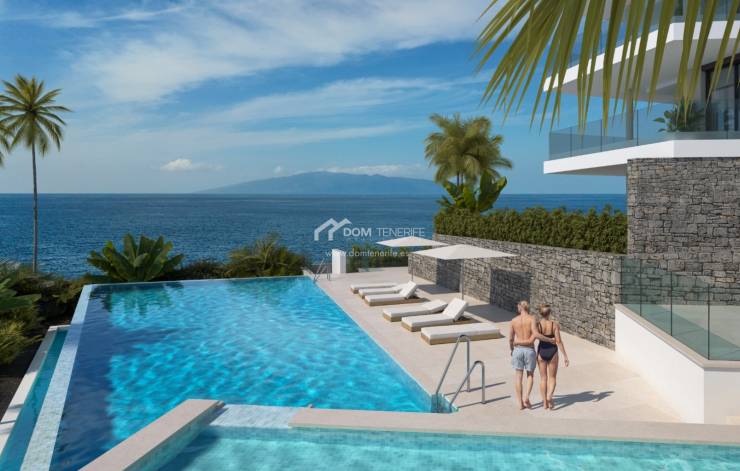
DOM Tenerife · Insight
The south coast of Tenerife has emerged as a substantial market for high-net-worth residential acquisition, with sustained demand from Northern and Central Europe anchoring capital flows into established zones including Costa Adeje, El Duque, and Abama. This guide addresses the practical and legal realities of property ownership in the Canary Islands, moving beyond photography to foundation-level due diligence.
Demand for luxury homes in Tenerife’s south coast derives predominantly from Nordic countries, the UK, and Central Europe, with secondary flows from Russia and the Benelux region. These buyers typically seek either primary winter residences or portfolio diversification in a subtropical climate zone. The demographic has remained stable over recent years, with acquisition patterns reflecting both lifestyle migration and capital preservation strategies. Property values in established micro-zones—El Madroñal, Bahía del Duque, Abama—have appreciated steadily across the five-year period, driven by finite supply, infrastructure maturity, and consistent foreign capital inflows. Buyer sophistication in due diligence has increased measurably; currency hedging and legal structure (individual versus corporate ownership) are now routine considerations rather than exceptions. The market continues to attract serious capital, though transaction velocity fluctuates with broader European economic cycles.
Discover the development in detail
Floor plans, specifications and current availability, sent by one of our advisors in your language.
See the developmentWhatsAppWaterfront villas in El Madroñal, Abama, and La Caleta command the highest valuation tiers, with prices reflecting both oceanview prominence and plot size. Penthouses in first-line developments—notably within Bahía del Duque and established Costa Adeje complexes—occupy a distinct mid-premium segment, offering sea exposure without full villa maintenance. Secondary-line apartments, positioned one or more blocks from the coast, provide entry into luxury communities at materially lower acquisition cost whilst retaining access to shared amenities, governance structures, and resale liquidity. Specific valuations depend on precise location, aspect, terrace dimension, parking allocation, and community infrastructure maturity. El Duque and Golf del Sur present distinct pricing profiles due to proximity to world-class golf and marina facilities respectively. Properties marketed on lifestyle amenities alone (pools, gyms, concierge) should be verified against actual operational status and reservation records.
Before commitment, verify the property against the Catastro (Spanish land registry) to confirm plot dimensions, legal classification, and any registered charges or encumbrances. Urban planning status must be confirmed at municipal level; some properties in Tenerife south are zoned for restricted use or subject to heritage protections not immediately visible in marketing materials. Request a certified copy of the building certificate (Certificado de Eficiencia Energética) and completion documentation for any major works. Community of owners (comunidad de propietarios) records must be obtained: annual budgets, pending works, litigation history, and reserve fund adequacy. Site visits must occur in daylight across multiple hours to assess noise, traffic, pool maintenance, and landscaping reality. Photographic marketing routinely obscures infrastructure age, cladding condition, and terrace aspect. Request engineering inspection reports for properties over fifteen years old, particularly those with sea-view terraces exposed to Atlantic wind loads.
Transfer tax (Impuesto de Transmisiones Patrimoniales, or ITP) applies to resale purchases; the rate is determined by regional (Canary Islands) statute and applies to the transaction price. New-build purchases are typically subject to VAT (Impuesto sobre el Valor Añadido, or IVA) in place of ITP, though exemptions exist for certain developer configurations. Municipal capital gains tax (plus-valía) is payable by the seller based on land appreciation, independently of the purchase price. Annual property tax (Impuesto sobre Bienes Inmuebles, or IBI) is levied by municipality; rates for luxury properties in Costa Adeje and El Madroñal are material. Non-resident sellers face a mandatory 3% retention (retención) on the gross transaction value, held by the buyer’s solicitor and remitted to Tax Authority. Income from rental use requires annual reporting via Form 211 (Declaración de la Renta). Corporate ownership structures can defer some liabilities but trigger separate compliance obligations. Engage a tax advisor certified in Canary Islands residence before finalizing.
Do not tender a deposit (señal) without a signed reservation agreement (contrato de reserva) specifying withdrawal rights, deposit hold period, and conditions precedent. Do not attempt self-translation of the escritura (deed); notarial documents require certified legal translation and independent review by your own solicitor. Do not dismiss community charges (cuotas) as minor administrative costs; in established Costa Adeje and El Duque complexes, monthly fees reflect real operating costs and are non-negotiable. Do not purchase based on compass direction alone; solar orientation in combination with terrace overhang, neighbouring structures, and seasonal sun path determines actual usability. Do not view properties after dusk; inadequate lighting masks structural cracks, damp, and mechanical system condition. Do not rely on verbal assurances from sales agents regarding planning permission, rental income projections, or service quality. Do not execute any document until your own legal representative has reviewed it in full in your native language.
Complete property acquisition in Tenerife requires certified translation of all legal instruments into your native language (English, German, Swedish, Russian, Danish, or Dutch as applicable) by a translator accredited to the Spanish courts. Full cadastral verification against the Registro de la Propiedad (property register) must confirm ownership chain, title clarity, and absence of liens. Notarial execution (acta notarial) is mandatory; attendance in person is strongly advisable to confirm understanding and intention. DOM Tenerife accompanies clients through NIE registration (tax identification number), bank account opening, notary appointment, and post-completion registry submission. Post-acquisition support includes community reporting coordination, utilities set-up, and annual compliance filing. Rental registration (if applicable) and tax filing deadlines are managed with certified local advisors. Insurance procurement—covering buildings, contents, and liability—is arranged prior to handover. This structured approach eliminates the friction, misunderstanding, and expense that characterize independent acquisition.
Oceanfront villas in El Madroñal, Abama, and La Caleta occupy the highest segment. First-line penthouses in Bahía del Duque and Costa Adeje developments command the mid-premium range. Secondary-line apartments, positioned away from the coast, are materially more affordable whilst retaining access to luxury community amenities. Exact pricing depends on size, aspect, terrace, and parking; your advisor will provide current market ranges for your specific criteria.
Confirm cadastral registration against the Catastro and Registro de la Propiedad. Obtain municipal planning certification and the building energy efficiency certificate. Request certified community of owners records including annual budgets, reserve funds, pending works, and litigation history. Site visits in daylight across multiple hours are essential to assess actual condition and amenity operation.
Resale purchases are subject to ITP (transfer tax, rate determined by Canary Islands statute). New-build transactions typically incur VAT instead. Sellers pay municipal capital gains tax (plus-valía) on land appreciation. Annual property tax (IBI) applies to all owners. Non-resident sellers face mandatory 3% retention. Consult a Canary Islands tax advisor before finalizing to confirm your specific liability.
Never deposit funds without a signed reservation agreement. Do not self-translate legal documents; use certified court-accredited translators. Do not dismiss community charges or ignore property orientation. Do not view properties only at night. Do not rely on agent verbal assurances regarding planning or rental income. Do not execute any document until your own lawyer has reviewed it in full in your native language.
DOM Tenerife provides full legal accompaniment: certified translation of all documents into English or your native language, cadastral and register verification, notary appointment and attendance, NIE registration, bank account facilitation, and post-completion registry management. Post-acquisition support includes community liaison, utilities coordination, rental registration (if applicable), and annual tax compliance filing with certified local advisors.
Acquiring a luxury home in Tenerife’s south coast requires rigorous attention to legal foundations, tax structure, and community operations. DOM Tenerife Real Estate commits to full transparency: verified documentation, professional translation, multilingual accompaniment through NIE, banking, notarial execution, and post-completion registry management. Your purchase is secured from first inquiry through final handover. Contact our team via WhatsApp +34 673 560 035 to begin.
Let’s talk whenever suits you
Video call, a meeting at our El Madroñal office, or WhatsApp on +34 673 560 035. We guide you from reservation to deed, in your language. DOM Tenerife — Buy safely.
Request informationMessage on WhatsApp#casas de lujo en tenerife # tenerife luxury real estate # dom tenerife # south tenerife property # hnwi tenerife buyer
Phone
+34 922 089 199Mobile and whatsapp
+34 673 560 035
Address
Avenida Kurt Konrad Mayer 63, El Madroñal, 38660 Adeje, Santa Cruz de Tenerife, España.