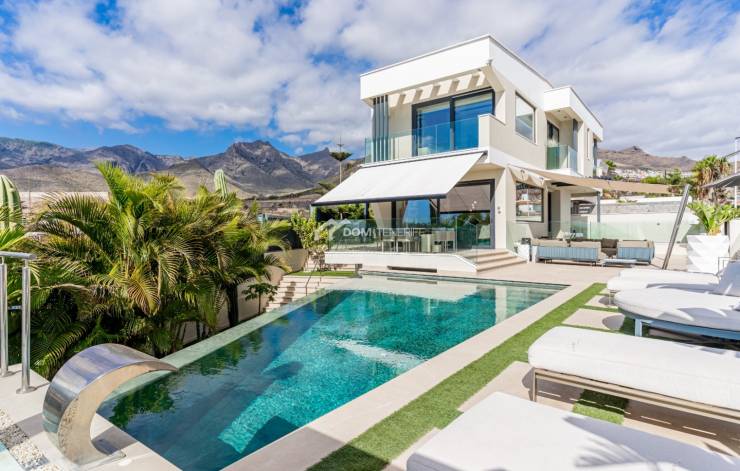
Community fees represent a material cost that extends far beyond purchase. In Costa Adeje, they vary substantially by location, property type, and amenity mix. Understanding the true monthly outflow—and the services it funds—is essential before committing capital.
Costa Adeje attracts high-net-worth purchasers primarily from Northern and Central Europe, the United Kingdom, and Russia, seeking coastal exposure and regulatory clarity. These buyers prioritise oceanfront placement, residency options, and professional property stewardship. Demand has remained consistent across economic cycles, though geographic preference has shifted within Tenerife's south: El Madroñal and La Caleta now command sustained attention. Over the past five years, asking prices for beachfront and elevated villa stock have moved upward in line with Euro-area monetary cycles and broader portfolio diversification among northern European asset holders. Second-line apartments, particularly in established complexes near Bahía del Duque, have shown steadier appreciation as mid-tier entry points. The market reflects structural undersupply of licensed stock and finite buildable terrain.
Oceanfront villas in Costa Adeje command premium positioning and corresponding fees. First-line penthouses and maisonettes occupy the intermediate tier, typically lower-density and with shared terraces. Second-line apartments form the entry category. Oceanfront villa stock ranges widely depending on plot size, construction year, and integrated amenities; asking prices have appreciated steadily but remain below European coastal equivalents. First-line penthouses in established schemes near Bahía del Duque occupy a mid-range band. Second-line apartments, particularly within managed complexes with pools, gyms, and perimeter security in El Duque or Playa Paraíso, form an accessible entry category. Community fees correlate directly with amenity density, structural age, and shared-service footprint rather than nominal property price alone. Newly built apartments command higher fees; mature complexes, lower. Oceanfront placement attracts premium levies for sea-wall and landscaped access maintenance.
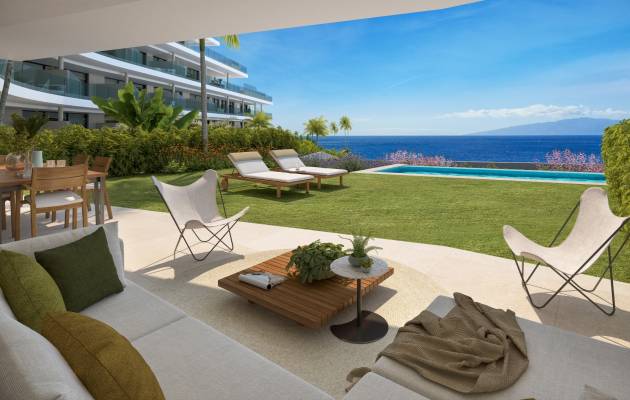
Every Costa Adeje property carries a cadastral reference (catastral number) issued by Spain's land registry; verify this against the notarial deed and title insurance. Zoning classification—residential, mixed, or developmental—affects insurance underwriting, mortgageability, and future modification rights. Comunidad de propietarios (owners' association) bylaws govern common-area maintenance, voting thresholds, and fee-setting. Request the acta (association minutes) from the last three annual assemblies to identify disputes, special assessments, or deferred maintenance. Physical condition rarely matches marketing photography: visit electrical substations, water-pressure systems, and pump stations personally during daylight and evening. Enquire into recent major works (facade treatment, roof replacement, pool resurfacing). Many complexes in El Madroñal and La Caleta have operated for 15–25 years; anticipate capital reserves for structural inspection and asbestos remediation protocols mandated by Spanish building regulations.
Property acquisition in Spain attracts transfer tax (ITP) on resale at rates varying by autonomous community, or value-added tax (IVA) on new builds from the developer. Municipal gain tax (plusvalía municipal) is levied on nominal appreciation, calculated from prior sale date and current valuation. Annual property tax (IBI) is owed to the municipality and varies by cadastral value. Non-residents completing purchase must file modelo 211 (annual tax return). Critically: if the seller is non-resident, the acquiring party's notary must withhold 3% of the purchase price and remit it to Spain's tax authority (Agencia Tributaria) unless an exemption certificate is obtained. This withholding is not negotiable and does not represent additional cost—it is a legal hold. Verify seller residency status and obtain withholding exemption documentation before contract execution to avoid complications at closing.
First: never remit deposit funds without a signed reservation contract (contrato de reserva) specifying refund terms, timeline, and community-fee liability date. Second: do not rely on developer or agent translation of the deed; retain a qualified legal translator for notarial review. Third: underestimate community fees by comparing only nominal maintenance charges; request the last 12 months of actual billings, including one-off special assessments or capital-reserve injections (cuotas extraordinarias). Fourth: ignore aspect and orientation; a south-facing apartment in El Duque may incur elevated cooling costs, while a north-facing villa in Abama may suffer dampness. Fifth: decline to visit the property between 19:00 and 22:00 to assess ambient noise, vehicle traffic, and nightlife spillover from adjacent commercial zones. These omissions invite post-purchase surprises.
DOM Tenerife engages qualified notaries (notarios) and multilingual legal advisers to execute title searches, verify community bylaws, and confirm tax clearance before closing. Every deed is professionally translated into your native language; no buyer signs without understanding contractual terms. We accompany clients to the notarial office (escritura publica), handle NIE (foreign resident number) registration, and coordinate with Spanish banks for mortgage disbursement. Post-completion, we provide registered copies of the deed, guidance on annual IBI payments, and introduction to reliable community administrators and licensed tax advisers. We verify that all property registers are updated and that your ownership is recorded at the Land Registry (Registro de la Propiedad). Should disputes arise—fee disputes, maintenance defects, or administrative irregularities—we facilitate resolution through established community governance channels and, if necessary, legal counsel.
Community fees vary materially by property type and location. Oceanfront villas typically command higher levies than second-line apartments. Request 12 months of actual billing statements from the community administrator (administrador) and review the association budget to confirm both standing charges and any scheduled capital-reserve contributions. Fees may increase annually in line with inflation and shared-cost inflation.
Community fees fund common-area maintenance (landscaping, pathways, exterior lighting), structural insurance, pool and spa operations, waste collection, security staff, and administrative costs. Fees also accumulate reserves for major works—facade treatment, roof repairs, waterproofing, elevator maintenance. Verify the service schedule and reserve-fund policy in the association bylaws (estatutos).
Yes. Complexes older than 15 years frequently face facade inspections, electrical upgrades, or structural remediation mandated by Spanish building codes. Request the community's acta (meeting minutes) for the past three years to identify whether special levies have been approved or anticipated. Reserves should be adequate to cover foreseeable works; if reserves are depleted, assessments will follow.
Community fees are set collectively by owners' vote at the annual assembly and cannot be individually negotiated post-purchase. Reduction requires formal proposal and majority approval. If fees appear excessive, audit the administrator's expense reporting and reserve allocation; legitimate cost-saving measures may be achievable through administrative efficiency or competitive re-tendering of service contracts.
Non-payment triggers debt collection proceedings initiated by the community administrator. Unpaid fees accrue interest and may result in a legal charge (embargo) against the property title. In extreme cases, the property may be sold at public auction to recover arrears. Payment is not optional; it is a statutory obligation enforceable under Spanish property law.
Obtain a certificado de deudas (debt certificate) from the community administrator, confirming no outstanding arrears. Request this document at the contract stage and ensure it is included as a closing requirement. The notary will verify this certificate before recording your ownership. If the seller owes fees, they must be settled from sale proceeds before funds are released.
Not necessarily. Villas carry individual responsibility for all systems (heating, plumbing, electrical, external structure); community apartments share infrastructure costs. A villa's higher purchase price often reflects private maintenance savings, but actual outlay depends on property age, system quality, and usage intensity. Apartments in well-managed complexes with strong reserves may offer lower total cost of ownership.
IVA (value-added tax) applies to new builds purchased directly from the developer; ITP (transfer tax) applies to resale properties. IVA is typically higher but offers a tax credit; ITP is a direct tax on the transaction value. Rates vary by region. Your notary calculates the exact liability based on property type and transaction date.
Yes. If the seller is a non-resident, your notary must withhold 3% of the purchase price and remit it to Spain's tax authority. This is not an additional cost—it is a legal requirement. However, the seller may provide a withholding exemption certificate (certificado de exención) if they meet specific criteria. Verify this early with the seller's tax adviser.
Modelo 211 is Spain's annual non-resident property tax declaration, filed with the Agencia Tributaria. Non-resident property owners must file this every year to report rental income, expense deductions, and property status. Failure to file can result in significant penalties. Your tax adviser or local gestoría (tax office) should handle this filing on your behalf.
Once all parties have agreed and documentation is complete, the notarial deed (escritura publica) can typically be executed within 5–10 working days. The notary will require proof of funds, identification, tax registration, and any relevant exemption certificates. DOM Tenerife coordinates all documentation and accompanies you through the process.
Assess ambient noise from adjacent bars or restaurants, parking congestion, vehicle traffic patterns, and lighting adequacy in common areas. Check whether pool areas become occupied with noise-generating activity after sunset. Observe security response and gate access. These factors significantly impact quality of life and may not be apparent during daytime viewings.
DOM Tenerife is committed to transparent, fully documented acquisition. We verify every cadastral reference, community bylaw, tax obligation, and notarial requirement before you commit capital. Our multilingual team accompanies you through NIE registration, bank coordination, notarial execution, and post-purchase registry confirmation. You can reach us via WhatsApp at +34 673 560 035 to discuss your Costa Adeje acquisition with confidence.
#community fees in costa adeje complexes # tenerife luxury real estate # dom tenerife # south tenerife property # hnwi tenerife buyer
Phone
+34 922 089 199Mobile and whatsapp
+34 673 560 035
Address
Avenida Kurt Konrad Mayer 63, El Madroñal, 38660 Adeje, Santa Cruz de Tenerife, España.