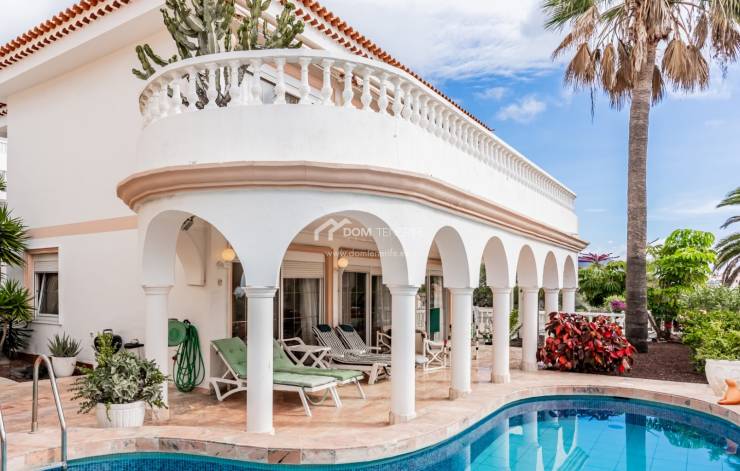
DOM Tenerife · Buyer insight
Tenerife South, spanning Costa Adeje, El Duque, La Caleta and Abama, has established itself as Europe’s foremost subtropical real estate market for high-net-worth investors. This guide examines current buyer profiles, property typologies, legal frameworks and the verification protocols that distinguish a safe purchase from a costly mistake.
The luxury market in Tenerife South attracts predominantly Northern and Central European buyers, alongside UK and Scandinavian capital. Russian and Eastern European interest has expanded over the past five years. Demand concentrates among executives seeking year-round residences, empty-nesters reducing property portfolios, and portfolio diversifiers entering the Atlantic market. Villa transactions dominate by value; penthouse and second-line apartment segments serve the volume-efficient buyer. Price appreciation in El Madroñal, Abama and Golf del Sur has remained steady across the cycle, reflecting stable infrastructure and low supply elasticity. Currency exposure—particularly Sterling, Nordic krona and Eastern European currencies against the Euro—influences entry timing. Most acquisitions occur through direct purchase rather than fund or syndicate vehicles, reflecting the personal-residence character of the market.
Oceanfront villas in Abama, El Duque and La Caleta command the highest per-square-metre rates, reflecting exclusive positioning and architectural pedigree. First-line penthouses in Bahía del Duque and branded residences occupy the secondary tier. Second-line apartments—within El Madroñal, Golf del Sur, and behind the promenade in Costa Adeje—constitute the entry segment. Specific valuation requires site inspection: architectural condition, service infrastructure (water pressure, electrical load, drainage), plot tenure and municipal compliance vary sharply between 2005-era builds and recent completions. Buyers should expect significant variation in per-square-metre pricing between developments separated by merely 500 metres, depending on communal facilities, sea view angle and service-road access. Appraisal must occur on-site; photography alone misrepresents condition, orientation and real-estate context.
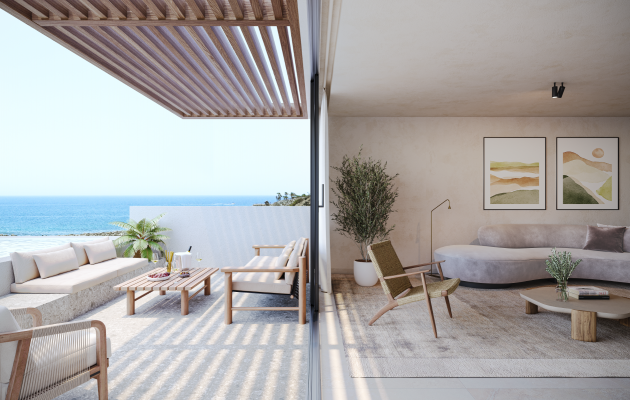
ICONIC Tenerife - Fase 3
New development selected by DOM Tenerife. Plans, prices and availability sent the same day.
Explore the developmentVerify every property through the Catastro (Spanish land registry) to confirm boundaries, declared area and municipal zoning classification. Urban status—whether the property sits in classified residential (urbano), transitional (urbanizable) or rural (no urbanizable) designation—fundamentally affects resale eligibility and future development rights. Community of proprietors (Comunidad de Propietarios) must provide current accounts, reserve-fund status, pending repairs and any legal disputes. Request a municipal compliance report (Informe de Compatibilidad Urbanística) to confirm no outstanding licences, violations or demolition orders exist. Instalaciones (water, electricity, gas, drainage) should be inspected by licensed engineer; many older buildings carry concealed structural debt—cracked façades, corroded pipes, failing sump pumps—undisclosed in marketing materials. Never rely on seller’s verbal assurances. Hire an independent surveyor before committing deposit.
Property transfer in Spain involves either Value Added Tax (IVA) at 10% on new builds or Transfer Tax (Impuesto sobre Transmisiones Patrimoniales, ITP) at approximately 6–8% on resale, depending on regional and transaction classification. Municipal capital gains tax (plusvalía municipal) applies on disposal—calculated against declared cadastral value at purchase—and applies regardless of actual market gain. Annual property tax (Impuesto sobre Bienes Inmuebles, IBI) is assessed municipally; request current statements from the vendor. Non-resident vendors face 3% retention on sale proceeds, withheld by notary and remitted to the Spanish tax authority. Buyers require a Spanish Tax Identification Number (NIF) or foreigner’s number (NIE) to hold title. File annual tax declaration (modelo 211, informativo only for residents; required for non-residents) confirming property status. Consult a tax adviser licensed in Spain before purchase; cross-border implications vary by buyer’s jurisdiction of residence.
Never pay a deposit without a signed reservation contract (contrato privado de reserva) specifying terms, refund conditions and completion timeline. Refusal to sign indicates intermediary fraud risk. Do not commission your own English translation of the final deed; use only a certified translator accredited to Spanish courts, as notarial acceptance of informal translations can void subsequent legal recourse. Underestimate community obligations at your peril—monthly fees may mask structural debt or litigation. Inspect the property at multiple times of day; evening visits obscure electrical wiring faults, plumbing noise and neighbour disturbance. Request three years of community meeting minutes and financial audits. Verify that utility meters are individually metered, not shared. Confirm parking assignment is registered in title, not merely oral agreement. Missing even one document creates refinancing, resale or inheritance complications.
DOM Tenerife Real Estate conducts full documentary verification before recommendation: Catastro cross-check, municipal compliance audit, community-fund inspection, utility connectivity confirmation and title-sequence review. We commission certified Spanish translations of all contracts and deeds, reviewed by our legal partners before notarisation. Our multilingual team accompanies buyers through NIE application, bank mortgage negotiation (where relevant), notarial signing and property registry inscription. Post-purchase, we coordinate utility transfers, tax registration, community-fee setup and architectural certification (Cédula de Habitabilidad) where required. We do not represent you as your legal adviser—you retain independent Spanish counsel—but we eliminate language barriers, procedural confusion and document gaps that expose buyers to loss. Every transaction receives a verification report; any red flags halt the process until resolved. Your certainty at signature is our commitment.
Northern and Central European buyers dominate, followed by UK, Scandinavian and increasingly Russian and Eastern European capital. Most seek personal residences rather than investment vehicles, with a secondary cohort of portfolio diversifiers and retirees downsizing from larger European properties.
Oceanfront villas in Abama and El Duque command premium per-square-metre rates reflective of their exclusivity. First-line penthouses in Bahía del Duque occupy the secondary tier. Second-line apartments in El Madroñal and Golf del Sur serve the entry segment. Exact pricing requires individual appraisal on-site; location variation within 500 metres can shift per-square-metre value materially.
Consult the Catastro for boundaries and zoning, request a municipal compliance report (Informe de Compatibilidad), review community financial accounts and legal minutes, and commission an independent surveyor’s assessment. Never rely on photographs or seller assurances; infrastructure defects and community debt often remain invisible in marketing materials.
New builds attract 10% Value Added Tax (IVA); resale properties incur Transfer Tax (ITP) at 6–8%. Annual property tax (IBI) applies yearly. On resale, municipal capital gains tax (plusvalía) applies on declared cadastral gain. Non-resident sellers face 3% withholding. Consult a licensed Spanish tax adviser before purchase.
Never pay deposit without a signed reservation contract. Use only certified Spanish translations of legal documents. Inspect the property at multiple times of day and review three years of community accounts. Verify parking and utility assignments are registered in title. Do not underestimate monthly community fees or ignore minor structural defects.
We conduct full documentary and structural verification before recommendation, commission certified Spanish translations reviewed by legal partners, and accompany you through NIE application, mortgage negotiation, notarisation and registry inscription. Post-purchase, we coordinate utility transfers, tax registration and community setup to eliminate procedural confusion and document gaps.
Buying luxury real estate in Tenerife South requires certainty at every step—from title integrity to infrastructure soundness to tax compliance across jurisdictions. DOM Tenerife Real Estate executes full legal and documentary verification, multilingual notarial accompaniment and post-purchase management to eliminate the hidden costs and procedural errors that expose international buyers to loss. Contact us today via WhatsApp +34 673 560 035 to discuss your acquisition with a local expert who knows every street, every building and every regulatory framework in Costa Adeje, El Duque, Abama and Golf del Sur. Buy safely.
Let’s talk whenever suits you
Video call, a meeting at our El Madroñal office, or WhatsApp on +34 673 560 035. We guide you from reservation to deed, in your language. DOM Tenerife — Buy safely.
Request informationMessage on WhatsApp#luxury real state tenerife # tenerife luxury real estate # dom tenerife # south tenerife property # hnwi tenerife buyer
Phone
+34 922 089 199Mobile and whatsapp
+34 673 560 035
Address
Avenida Kurt Konrad Mayer 63, El Madroñal, 38660 Adeje, Santa Cruz de Tenerife, España.