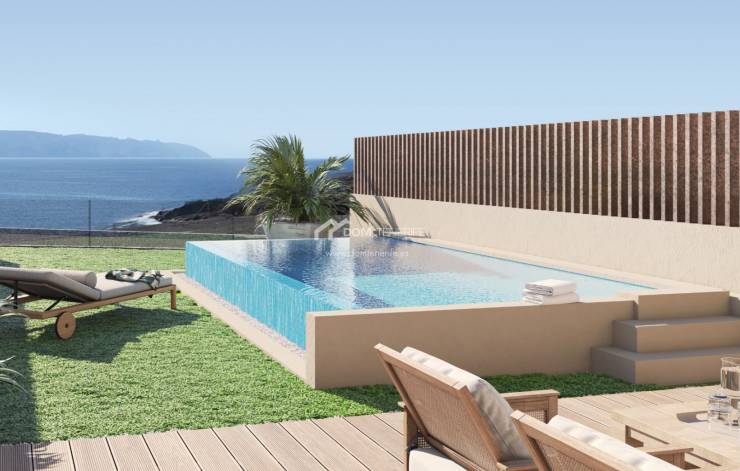
DOM Tenerife · Buyer insight
Los Gigantes and Puerto Santiago occupy a distinctive position on Tenerife’s south coast, where volcanic cliffs rise above working marinas and Atlantic waters. These quieter settlements offer an alternative to the higher-density resort zones of Costa Adeje, attracting buyers who value maritime character and proximity to El Madroñal and Abama.
Buyers acquiring homes in Los Gigantes and Puerto Santiago typically originate from Northern and Central Europe, the United Kingdom, and Belgium, often seeking escape from seasonal winters rather than primary relocation. Demand has evolved from speculative interest in the mid-2010s toward longer-term occupancy patterns, with growing emphasis on security, marina infrastructure, and proximity to private clubs such as Abama. Scandinavian and German purchasers favour cliffside villas with sea views and private moorings; British and French buyers gravitate toward low-maintenance apartments near restaurants and yacht facilities. The shift reflects maturation: fewer first-time overseas buyers, more repeat investors consolidating holdings or downsizing from larger estates in El Madroñal. Currency fluctuations and fiscal stability have reinforced appeal among Northern European portfolios, particularly from clients anchoring South Atlantic exposure.
Los Gigantes and Puerto Santiago accommodate three distinct market tiers. Cliffside villas with unobstructed sea views and private access to mooring berths command the highest valuations, typically occupied by single-digit portfolios. Waterfront apartments and penthouses on marina-facing façades form the intermediate segment, combining balcony sea exposure with shared amenity management. Inland apartments and townhouses, stepping back from cliffs toward residential zones, occupy the accessible base tier. DOM Tenerife currently lists 6 homes in Puerto Santiago, with asking prices ranging from €210,000 to €1,150,000 and a median of €495,000, illustrating the breadth of market segmentation. Qualitatively, entry-level resale apartments in secondary-line positions appreciate steadily; waterfront units command premium valuations reflecting marina proximity and Atlantic orientation; cliff villas remain the rarest supply and sustain values across market cycles.
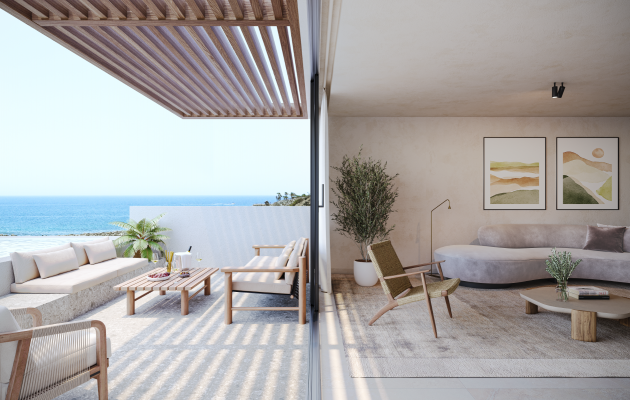
ICONIC Tenerife · Fase 3
New development selected by DOM Tenerife. Plans, prices and availability sent the same day.
Explore the developmentProperties in Los Gigantes and Puerto Santiago fall within managed residential zones with established planning designations; cadastral records (catastro) confirm individual plot boundaries and built area. Apartamentos in waterfront complexes operate under community ownership (comunidad de propietarios) governed by written bylaws, requiring verification of current maintenance fees, pending repairs, and reserve fund adequacy before purchase. Villas typically exist as independent lots, though shared-mooring arrangements involve maritime concessions held in common. Physical inspections must occur in daylight: salt-air corrosion affects exposed metalwork and external joinery; cliff proximity introduces weathering and potential cracking in foundation areas. Building systems—particularly water pumps, sewage treatment in non-mains areas, and electrical distribution in older developments—require assessment beyond photographic records. Obtain community meeting minutes (últimas tres actas) to verify pending expenditure or disputes affecting resale value.
Resale homes in the Canary Islands incur transfer tax (ITP) at 6.5%. New-build properties carry IGIC at 7% plus stamp duty (AJD) on the notarial deed. Non-resident sellers trigger mandatory buyer withholding: 3% of the purchase price must be remitted to the Spanish Tax Agency (Agencia Tributaria) within one month via form 211, reducing the net proceeds the seller receives. Municipal capital gains tax (plusvalía) applies when the seller has held the property less than five years; calculate using municipal land value tables (valor catastral del suelo) supplied by the town hall. Annual property tax (IBI) is levied on the cadastral value and varies by municipality. An NIE (foreigner identification number) is compulsory for all non-resident buyers; neither Spanish residency nor a Spanish bank account is required to acquire title, though a Spanish tax identification is mandatory for tax filings and registry transfer.
Do not deposit earnest money (señal) without a signed reservation agreement (contrato privado de reserva) explicitly protecting your deposit in an escrow account and setting clear conditions for return. Avoid relying on translated appraisals or photographs alone; engage a professional surveyor to assess structural integrity and building systems in person. Underestimating community reserves is a common error: request audited financial statements and obtain a solicitor’s opinion on adequacy of maintenance provisions, particularly in seafront complexes exposed to salt corrosion. Neglect of solar orientation (south-facing balconies command premium rental returns) can diminish long-term income potential. Never conduct your only inspection after sunset or during stormy weather; visibility of defects, water ingress patterns, and moisture staining is compromised. Verify that the seller’s NIE is active and that no liens (cargas) exist on the property via a registered search (informe de cargas). Confirm mooring rights in writing if marina access is a purchase driver.
DOM Tenerife’s advisory process begins with certified retrieval of the property file: notarial deed (escritura), cadastral extract, tax compliance certificates (certificados de no deuda), community bylaws and financial records. All deeds in foreign languages are translated by a qualified legal translator (traductor jurado) sworn to the Spanish judiciary; direct translation of English contracts into Spanish notarial language is a specialist function, never delegated to tourism interpreters. Our advisors attend all notarial meetings, ensuring you comprehend every clause before signing and that the closing deed (escritura pública) matches the negotiated price and conditions. Post-sale, we coordinate with your bank and the Land Registry (Registro de la Propiedad) to confirm transfer of title, resolve any AEAT communications arising from the 3% withholding, and obtain your official property registration certificate. This end-to-end accompaniment removes language barriers, ensures tax compliance, and secures your acquisition within Spanish law.
No. Foreign buyers do not require Spanish residency to purchase property. However, you must obtain an NIE (foreigner identification number) from the Spanish police to sign the deed and register title. The NIE is issued on presentation of your passport and proof of the purchase agreement and is valid indefinitely for tax and legal purposes.
When the seller is a non-resident, Spanish law requires the buyer to withhold 3% of the purchase price and remit it to the Spanish Tax Agency (AEAT) within one month using form 211. This reduces the net amount the seller receives but does not increase your total cost if the 3% is deducted from the agreed price. Your advisor ensures the withholding is correctly calculated and filed.
Resale homes in the Canary Islands incur transfer tax (ITP) at 6.5% of the purchase price. Additionally, you may owe municipal capital gains tax (plusvalía) if the seller acquired the property fewer than five years ago; this is calculated by the town hall using cadastral land values. Your solicitor will obtain a plusvalía estimate before closing.
Never deposit earnest money without a signed written reservation contract (contrato privado de reserva) that specifies the amount, conditions for return, and confirmation that the funds are held in escrow by a neutral third party. This protects your capital and sets out the terms—price, completion date, and any conditions—before commitment.
Obtain the community bylaws (estatutos), the last three meeting minutes (actas), and audited financial statements. Verify the monthly maintenance fee (cuota de comunidad), reserve fund adequacy for repairs, and any pending assessments or litigation. A low fee may signal an underfunded reserve, risking large special assessments after your purchase.
We retrieve and verify all property documents, arrange legal translation of deeds, accompany you to notarial meetings to ensure understanding, coordinate with your bank and the Land Registry, and manage post-sale tax filings. Our multilingual advisors remain your point of contact from offer through registration of title, removing language barriers and ensuring compliance with Spanish law.
Purchasing a home in Los Gigantes or Puerto Santiago is a significant commitment. DOM Tenerife’s advisory practice centres on complete document verification, certified legal translation, notarial accompaniment, and transparent post-sale coordination—ensuring you buy safely and with full confidence in Spanish law. Contact us via WhatsApp at +34 673 560 035 to arrange a confidential consultation and portfolio review.
Let’s talk whenever suits you
Video call, a meeting at our El Madroñal office, or WhatsApp on +34 673 560 035. We guide you from reservation to deed, in your language. DOM Tenerife — Buy safely.
Request informationMessage on WhatsApp#propiedades en los gigantes # tenerife luxury real estate # dom tenerife # south tenerife property # hnwi tenerife buyer
Phone
+34 922 089 199Mobile and whatsapp
+34 673 560 035
Address
Avenida Kurt Konrad Mayer 63, El Madroñal, 38660 Adeje, Santa Cruz de Tenerife, España.