DOM Tenerife · Buyer insight
Playa San Juan in southern Tenerife attracts international buyers seeking new-build homes with staged payment structures and developer guarantees. Understanding the mechanics of stage payments, bank security instruments, tax obligations and notarial procedures is essential before committing to an off-plan purchase.
Buyers acquiring new-build homes in Playa San Juan come predominantly from Northern and Central Europe, the United Kingdom and Belgium, typically looking for second homes or retirement properties. These purchasers prioritise legal certainty, transparent transaction costs and the developer’s structural solvency before signing a reserva. Over recent years, demand has reflected broader shifts toward properties with modern build standards, energy certification and integrated management structures—qualities that appeal to buyers accustomed to established regulatory frameworks at home. The shift away from older resale stock toward obra nueva reflects preference for warranty periods, lower maintenance exposure and verified completion timelines. DOM Tenerife’s current inventory in Playa San Juan spans 33 homes, ranging from €325,000 to €2,395,000, with a median asking price of €1,132,000, illustrating the breadth of profiles seeking entry at different price bands. Buyers increasingly conduct due diligence on the promoter’s track record, the independence of the bank guarantee and the clarity of contractual stage-payment milestones before advancing funds.
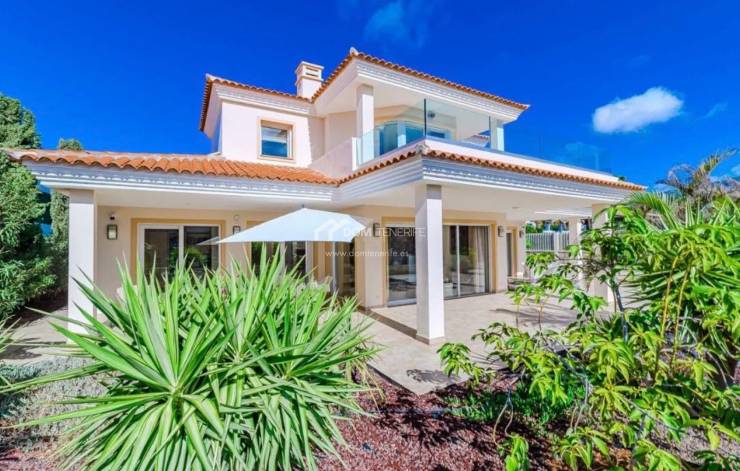
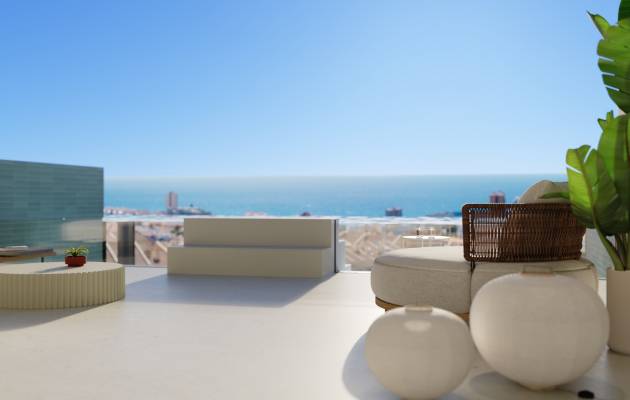
Playa San Juan’s new-build offerings form a clear pricing structure. Waterfront villas command the highest valuations, offering direct beach access and unobstructed Atlantic views; these typically anchor the upper tier of DOM Tenerife’s current listings. First-line beachfront apartments—occupying the front rank of residential blocks—represent the middle-to-upper segment, priced substantially above interior units yet more accessible than standalone villas. Second-line and rear apartments, positioned away from the shoreline, form the entry-to-mid market, appealing to buyers prioritising location accessibility over seaward panoramas. This hierarchy reflects not sentiment but proximity to utilities, natural light exposure, noise attenuation and resale velocity. New-build developments commonly tier pricing according to floor level, solar orientation and distance to communal facilities; a south-facing corner unit will typically exceed a north-facing central apartment on the same floor. DOM Tenerife’s current portfolio reflects all three categories, with asking prices distributed across this topology. Buyers should visit properties across multiple tiers to calibrate their preferences against actual premium percentages rather than relying on metric distance alone.
ENA Luxury Homes
New development selected by DOM Tenerife. Plans, prices and availability sent the same day.
Explore the developmentBefore reserving an off-plan property, verify the developer’s current planning permission (licencia de obras) and municipal building license (cédula de habitabilidad pending completion). Request the Land Registry extract (nota simple) to confirm the developer owns unencumbered title and that no prior liens or community charges burden the plot. Review the community statutes (estatutos de la comunidad de propietarios) to understand future maintenance fees, voting rights and reserve-fund obligations. New-build developments typically establish governance frameworks before the first residents arrive; these govern everything from common-area maintenance to special assessments. Inspect the preliminary building standards—thermal insulation levels, plumbing materials, electrical load capacity—rather than trusting marketing renderings; site visits should occur midway through the construction phase when structural elements are visible. Request certified copies of any pre-contract conditions, construction delays or developer modifications. Land tax (contribución rústica or urbana) and municipal property tax (Impuesto sobre Bienes Inmuebles—IBI) commence at completion; clarify with the developer whether provisional IBI has been calculated. The geological surveyor’s report and environmental clearances should be available for inspection before commitment.
New-build homes purchased directly from the developer in the Canary Islands incur IGIC (Canary Islands General Indirect Tax) at a general rate of 7%, plus stamp duty (Actos Jurídicos Documentados—AJD) on the deed. This differs fundamentally from resale homes, which carry transfer tax (Impuesto sobre Transmisiones Patrimoniales—ITP) at 6.5%. When the developer is non-resident (increasingly common with mainland or international promoters), the buyer must withhold 3% of the purchase price and remit it to the Spanish Tax Agency (Agencia Tributaria) using form 211 within one month of closing. Municipal property tax (IBI) and municipal development tax (plusvalía municipal) apply from completion onward; the plusvalía calculation depends on the property’s cadastral valuation and holding period. Your fiscal advisor (gestor) should calculate these obligations clearly before signature. IGIC and AJD are not recoverable; budgeting for approximately 8–9% in total acquisition tax on new-build is standard. Ensure your purchase agreement specifies whether the developer bears certain pre-completion taxes or passes them to the buyer; this allocation materially affects your true entry cost.
Do not deposit a reserva (booking fee) without a signed, dated reserva agreement clearly stating the property reference, price, payment schedule and cancellation terms. Verbal assurances carry no legal weight in Spanish conveyancing. Never rely on machine translation of the deed (escritura de compraventa) or community documents; instruct a qualified legal translator with property experience to produce certified versions, identifying obligations and exclusions that automated tools miss. Underestimating community fees based on one year’s accounts is unwise; request three years of financial records and ask the administrator whether special assessments are planned (new roofing, plumbing overhaul). Solar orientation profoundly affects heating costs, natural light and resale appeal; assess the property’s east, south and west exposure at multiple times of day and seasons before committing. Visiting a property only at night obscures structural defects, dampness, noise from adjacent roads or neighbours and the true quality of finishes. Request a midday and late-afternoon site inspection, noting window condensation, crack patterns and the actual condition of communal staircases. Developers often stage occupation, meaning your building may be partly empty at handover; confirm the occupancy rate and ask whether communal services (lift maintenance, security) operate at full capacity.
DOM Tenerife’s advisory service encompasses exhaustive document review before you sign anything. We obtain certified copies of the planning license, building permit, cadastral registry extract and developer’s corporate status, cross-referencing these against the preliminary purchase agreement. All contractual documents are rendered into your native language by qualified legal translators; we accompany you through every reading to ensure comprehension of payment milestones, completion contingencies and defect liability periods. Upon signature, we coordinate with the notary (notario) to ensure the deed reflects your agreed terms and that IGIC, AJD or ITP is correctly calculated. We manage your NIE (foreigner identification number) application—a prerequisite for Spanish bank accounts and land registry inscription—liaising with the Policía Nacional on your behalf. Post-completion, we assist with utility connections, community registration, tax filing and any defect claims within the statutory warranty period. Our role extends beyond transaction closure; we remain available for queries about community governance, tax obligations and maintenance responsibilities as you settle into ownership. This comprehensive accompaniment, from initial inspection to keys in hand, embodies our commitment to buying safely in Tenerife’s competitive new-build market.
Stage payments are agreed individually per developer and project. A common structure includes a reserva (2–10% at booking), further tranches at foundation completion, roof closure and handover, with the final payment due at notarial closure. The purchase agreement must specify each milestone clearly; never advance funds without a signed schedule tied to verifiable construction progress.
The developer typically obtains a bank guarantee (aval bancario) from a Spanish or international bank, guaranteeing that customer deposits are held in escrow and released only upon completion of contracted milestones or upon your written instruction. Request sight of the guarantee document and the bank’s contact details; this security is your recourse if the developer enters insolvency before handover.
IGIC (Canary Islands General Indirect Tax) is charged at 7% on new-build homes purchased directly from the developer in the Canary Islands. ITP (transfer tax) is charged at 6.5% on resale homes. IGIC includes stamp duty (AJD); together they approximate 8–9% of purchase price and are not recoverable. Resale properties incur only ITP and AJD at lower rates.
When the developer (seller) is non-resident for tax purposes, the buyer must withhold 3% of the purchase price and remit it to the Spanish Tax Agency (Agencia Tributaria) using form 211 within one month of closing. This is a legal obligation, not optional; your notary and gestor will manage the filing.
No. Foreign buyers need only an NIE (foreigner identification number), which is obtained from the Policía Nacional before purchase. Residency is not required. DOM Tenerife manages the NIE application process on your behalf as part of our advisory service.
Nocturnal visits obscure structural defects, dampness, cracks and noise sources from neighbours or adjacent roads. Solar orientation (east, south, west exposure) affects heating costs and natural light; assessing these requires visits at multiple times and seasons. Daytime inspection also reveals the true quality of finishes and communal areas.
Your purchase agreement should specify a maximum delay tolerance and contractual penalties (interest or rebates) if the developer overshoots. Request clear definition of force majeure exceptions. Upon handover, you have statutory defect liability rights; minor defects must be remedied by the developer within the first year.
Always in writing. A signed reserva agreement must specify the property reference, price, payment schedule, cancellation terms and any conditions (finance approval, survey satisfactory). Verbal assurances are unenforceable under Spanish law and expose you to financial loss if disputes arise.
A qualified legal translator produces certified translations of the deed (escritura), community statutes and all contractual documents into your native language. This ensures you understand every obligation, exclusion and contingency. Machine translation is insufficient; legal translation identifies nuances that automated tools miss.
Notarial closure (cierre en notaría) is the final legal step. You, the developer’s representative and the notary convene to execute the deed (escritura), which the notary registers with the Land Registry. The notary verifies identity, confirms IGIC/ITP/AJD payment and ensures the deed reflects your agreed terms. This is a formal, recorded event; the deed thereafter constitutes proof of ownership.
Buying an off-plan home in Playa San Juan requires meticulous verification at every stage—from reserva signature through final notarial closure. DOM Tenerife’s advisory approach ensures that your purchase is protected by exhaustive document review, certified legal translation, multilingual accompaniment before the notary and complete post-completion support. We manage your NIE application, coordinate with your fiscal advisor and ensure all tax obligations are correctly discharged. Contact us via WhatsApp +34 673 560 035 to discuss your off-plan purchase with a local advisor who knows Playa San Juan’s market and legal landscape.
Let’s talk whenever suits you
Video call, a meeting at our El Madroñal office, or WhatsApp on +34 673 560 035. We guide you from reservation to deed, in your language. DOM Tenerife — Buy safely.
Request informationMessage on WhatsApp#obra nueva en playa san juan # tenerife luxury real estate # dom tenerife # south tenerife property # hnwi tenerife buyer
Phone
+34 922 089 199Mobile and whatsapp
+34 673 560 035
Address
Avenida Kurt Konrad Mayer 63, El Madroñal, 38660 Adeje, Santa Cruz de Tenerife, España.


