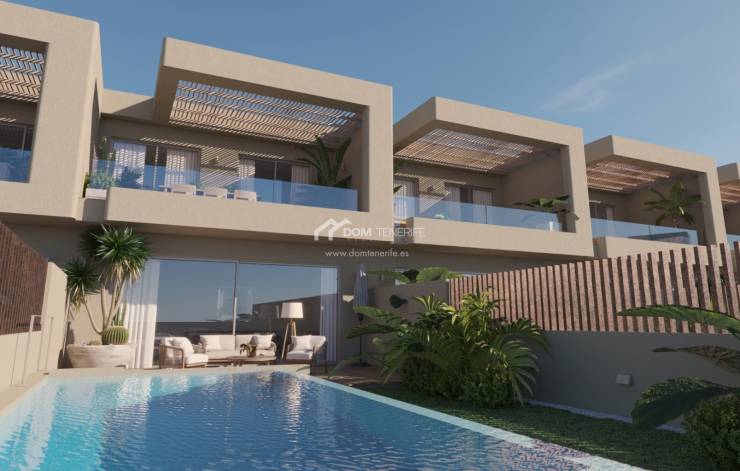
DOM Tenerife · Buyer insight
In the competitive market for luxury real estate across Tenerife’s south coast, the quality of visual presentation determines whether a property captures genuine enquiry or passes unnoticed. Professional photography and drone cinematography are no longer optional extras; they form the foundation of credible marketing for villas in Costa Adeje, El Duque, Abama and Golf del Sur.
Buyers acquiring villas in Costa Adeje and neighbouring zones are predominantly established families and investors from Northern and Central Europe, the United Kingdom, and Belgium, seeking a permanent residence or long-term investment with transparent legal standing. Demand has shifted meaningfully over recent years: purchasers now conduct preliminary research through visual media before any contact, scrutinise legal documentation with greater rigour, and expect multilingual support throughout the transaction. The typical buyer is experienced in international property acquisition, values tax clarity and regulatory certainty, and requires assurance that all documentation—from title deeds to community records—is complete and professionally verified. This demographic has become increasingly selective about presentation standards, recognising that professional imagery directly reflects the vendor’s commitment to the sale process and the property’s true condition.
Costa Adeje properties occupy distinct price tiers aligned with location and amenities. Seafront villas command the highest valuations, while beachfront apartments and penthouses occupy the second tier. Hillside and golf-adjacent residences—such as those in El Madroñal, Golf Costa Adeje, or Roque del Conde—form a separate category, priced according to views, privacy, and proximity to fairways rather than coastal access. Second-line apartments appeal to buyers prioritising walkable proximity to shops and beaches without oceanfront costs. DOM Tenerife currently lists 10 villas in Costa Adeje, with asking prices ranging from €1,075,000 to €2,620,000, median €1,195,000. Professional photography and drone work are essential for every tier: properties must convey their true spatial quality, aspect, and amenities. The buyer pool now expects video walkthroughs, aerial perspectives, and evening lighting studies before scheduling viewings.
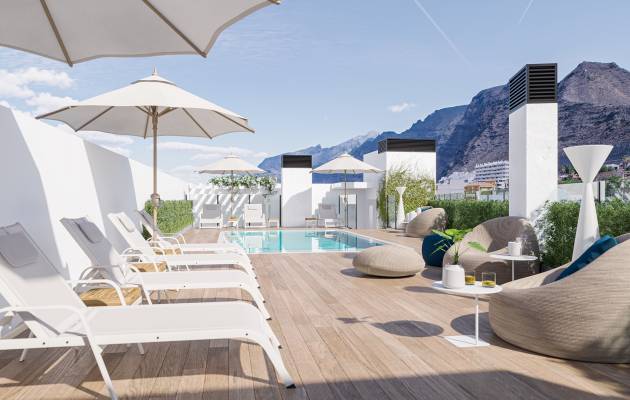
Santiago DeLuxe Homes
New development selected by DOM Tenerife. Plans, prices and availability sent the same day.
Explore the developmentBefore commissioning marketing imagery, legal clarity is essential. Every villa in Costa Adeje must be verified against the cadastral registry (catastro) to confirm plot boundaries, building footprint, and declared surface area—figures often diverge from vendor claims. Urban classification determines whether the property is legal-use residential or subject to restrictions; developments such as Bahía del Duque or Abama operate under specific town-planning consents that affect future development rights and community obligations. Community of owners (comunidad de propietarios) membership, if applicable, must be checked for pending charges, special assessments, or structural defects. Professional photographers should be briefed on the property’s true condition: exterior photographs must accurately represent facade finish, window frames, and garden state, while interior images should reflect actual lighting, ceiling heights, and room proportions. A property photographed to conceal deferred maintenance or structural wear invites costly disputes post-completion.
Tax liability directly affects the buyer’s total cost and must inform pricing strategy. When purchasing a resale villa in the Canary Islands, transfer tax (ITP) is charged at a general rate of 6.5% on the purchase price. New-build properties from the developer incur IGIC at 7% plus stamp duty (AJD) on the deed. Municipal plus-value tax (plusvalía municipal) applies if the seller has owned the property for fewer than five years and the land value has increased; this is a seller’s liability, but negotiation affects net proceeds. Annual property tax (IBI) varies by municipality and property classification. Critically, when the seller is a non-resident, the buyer must withhold 3% of the purchase price and remit it to the Spanish Tax Agency (Agencia Tributaria) using form 211 within one month—failure to comply creates liability for the buyer. Professional advisors must verify seller residency status before marketing and ensure buyers understand this obligation.
Rushed purchases without reserve agreements expose buyers to legal and financial risk. A deposit (señal) paid without a signed reserve agreement offers no protection if the seller withdraws or third-party claims emerge. Failing to commission professional legal translation of the deed (escritura) before signing—relying instead on verbal summaries or informal translations—has led to disputes over boundary lines, easements, and encumbrances. Underestimating community charges (cuotas de comunidad) or neglecting to request years of payment records has resulted in buyers inheriting arrears liability. Ignoring property orientation—a western aspect means afternoon heat and glare that photography alone cannot convey—leads to post-purchase regret, particularly in Costa Adeje’s subtropical climate. Viewing properties only in daylight obscures noise from nightlife areas, particularly near Playa Paraíso and San Eugenio Alto, and fails to reveal whether street lighting and security are adequate. Professional imagery should be supplemented by thorough due diligence, not replace it.
DOM Tenerife’s advisory process begins before marketing photographs are taken and extends beyond completion. Full cadastral and registry searches establish clear title; community records are obtained and reviewed; municipal certificates confirm no outstanding charges; and the seller’s tax and residency status is established. All deeds and restrictions are translated by qualified legal translators, not in-house staff. The buyer’s NIE (foreigner identification number) is obtained—residency is not required, only a valid identification. Throughout the acquisition, multilingual advisors accompany the buyer to notary meetings, explain deed contents, and ensure each signature reflects verified understanding. After completion, post-sale support includes registration of new ownership at the property registry, confirmation of tax filings, and handover of all original documentation. This systematic verification removes the ambiguity that low-quality or incomplete imagery creates and ensures the buyer receives exactly what was marketed and agreed.
No deposit should be paid without a signed written reserve agreement (contrato de reserva), which protects your money and sets terms for withdrawal. The agreement must specify the property, price, conditions precedent (surveys, finance, legal due diligence), and the seller’s obligations. Without this, your deposit has no legal standing and the seller may retain it if circumstances change.
No. You must commission a professional legal translator (traductor jurado) recognised by the Spanish authorities, not informal translation services or agency staff. A qualified translator provides a certified version that holds legal weight; this translation must be reviewed by your legal advisor before you sign the deed at the notary.
Community charges (cuotas de comunidad) cover maintenance, insurance, and common areas in developments with shared facilities. Request several years of payment records; if charges are unpaid, you inherit the debt. Underestimating these costs can significantly affect affordability, particularly in larger developments such as Bahía del Duque or Abama.
Orientation determines exposure to sun and prevailing wind. West-facing villas receive intense afternoon heat; north-facing properties may feel cooler but darker. In Tenerife’s subtropical climate, afternoon temperatures and glare from western exposure can affect comfort and energy costs. Professional photography cannot convey this; physical viewing and local advice are essential.
Yes, if possible. Evening visits reveal street lighting, noise from nearby bars or restaurants (particularly near Playa Paraíso and San Eugenio Alto), and security levels that daytime viewings conceal. A property may appear tranquil at noon but noisy and poorly lit at night, affecting long-term satisfaction.
Form 211 is required when you purchase from a non-resident seller. You must withhold 3% of the purchase price and remit it to the Spanish Tax Agency (Agencia Tributaria) within one month of completion. Your legal advisor must verify the seller’s residency status before exchange to ensure this obligation is managed correctly.
Transfer tax (ITP) applies to resale properties in the Canary Islands at a general rate of 6.5% of the purchase price. It is a buyer’s cost and must be budgeted separately from the purchase price. New-build properties incur IGIC (7%) instead, which is calculated differently.
Yes. An NIE (foreigner identification number) is required to purchase property in Spain; residency is not required, only a valid passport. Your legal advisor can guide the NIE application process, which is completed at the police (Policía Nacional) or via your embassy.
When the seller is a non-resident, you must withhold 3% of the purchase price and pay it to the Spanish Tax Agency using form 211 within one month. This is a buyer’s obligation; failure to comply creates personal tax liability. Your advisor must confirm residency status in advance.
Professional imagery—including drone perspectives, evening lighting studies, and accurate colour rendition—conveys the property’s true condition, scale, and amenities. Poor photography attracts fewer qualified enquiries and invites disputes over misrepresentation. In Costa Adeje’s competitive market, visual quality signals vendor professionalism and property authenticity.
DOM Tenerife’s advisory model centres on complete document verification, professional legal translation, and multilingual accompaniment at every stage—from initial due diligence through notary completion and post-purchase registration. We help you buy safely, with full transparency on tax obligations, community status, and property condition. To discuss your villa acquisition or to arrange professional marketing imagery, contact us via WhatsApp +34 673 560 035.
Let’s talk whenever suits you
Video call, a meeting at our El Madroñal office, or WhatsApp on +34 673 560 035. We guide you from reservation to deed, in your language. DOM Tenerife — Buy safely.
Request informationMessage on WhatsApp#luxury villa photography costa adeje # tenerife luxury real estate # dom tenerife # south tenerife property
Phone
+34 922 089 199Mobile and whatsapp
+34 673 560 035
Address
Avenida Kurt Konrad Mayer 63, El Madroñal, 38660 Adeje, Santa Cruz de Tenerife, España.


