DOM Tenerife · Buyer insight
European buyers—principally from Belgium, the Netherlands, Germany, the United Kingdom and France—constitute the primary market for luxury residential property across Costa Adeje, El Duque, Abama and El Madroñal. This guide outlines the acquisition process, tax obligations and legal safeguards essential for a secure purchase.
Buyers from Northern and Central Europe have consistently driven demand for south Tenerife’s luxury residential market. The majority seek either a permanent residence or a substantial second home with professional management potential; acquisition patterns reflect long-term investment intent rather than short-term speculation. Over recent years, interest from Germany and the Benelux has remained steady, while British and French inquiries have increased markedly. These purchasers typically conduct thorough due diligence, engage specialist advisors and prioritise legal certainty and transparent taxation. The demographic profile encompasses established professionals, business owners and retired individuals who value climate stability, proximity to Europe and regulatory clarity. Buyer sophistication has risen; reliance on traditional agency models has declined in favour of advisory services that provide document verification, multilingual notary accompaniment and post-acquisition support. This shift reflects the market’s maturation and buyers’ expectation of institutional-grade counsel.
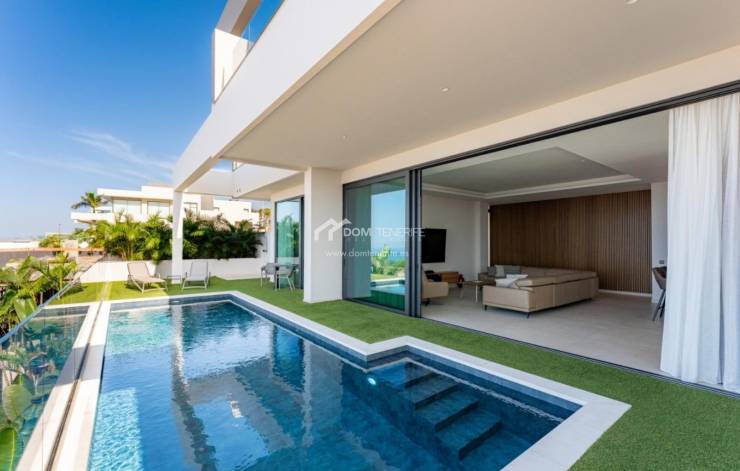
South Tenerife’s luxury portfolio spans three principal categories, each reflecting distinct positioning and oceanographic orientation. Oceanfront villas with private pools and sea-facing terraces command the highest valuations; these properties cluster in Costa Adeje, El Duque and along the Abama resort. Penthouse apartments in first-line developments—including those fronting Bahía del Duque and other waterfront complexes—occupy the intermediate tier, offering resort amenities and direct beach or marina access without the maintenance overhead of a detached house. Second-line apartments, typically positioned in El Madroñal, San Eugenio Alto and Golf Costa Adeje, deliver significant value within architecturally planned communities featuring common facilities, security infrastructure and established services. Each category attracts distinct buyer motivations: oceanfront properties appeal to those prioritising unobstructed views and seclusion; first-line apartments suit those seeking resort convenience; second-line homes attract buyers valuing community, golf access or proximity to commercial infrastructure. DOM Tenerife’s current portfolio reflects this segmentation; prospective buyers are invited to review current listings to establish their position within this hierarchy.
ENA Luxury Homes
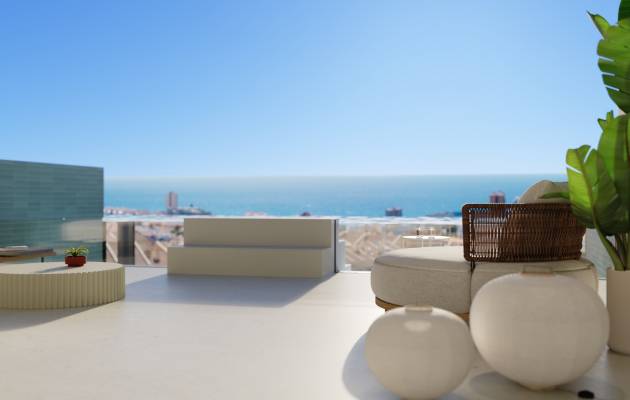
New development selected by DOM Tenerife. Plans, prices and availability sent the same day.
Explore the developmentSpanish property acquisition requires thorough examination of three distinct documentary layers: the title deed (escritura); the urban cadastral record (catastro), which establishes the property’s formal legal identity and boundary; and the municipal urban classification, which determines permitted use and future development potential. The buyers’ advocate must verify that the property is not subject to outstanding liens, mortgage charges, or pending municipal enforcement proceedings. Additionally, examination of the community of owners’ (comunidad de propietarios) governance records—including reserve fund adequacy, pending special assessments and maintenance expenditure patterns—provides crucial context for ongoing ownership costs. Visual inspection alone is insufficient; structural condition must be assessed by independent specialists, particularly regarding façade integrity, roof condition and marine salt exposure (critical in coastal zones). Building services, including water pressure and electrical capacity, often perform differently under full occupancy than during viewings. Professional surveys reveal latent defects invisible during daytime inspections; this verification precedes any binding commitment.
Purchase taxation in the Canary Islands operates under two principal regimes. Resale properties are subject to transfer tax (ITP) at a standard rate of 6.5%, calculated on the declared purchase price and paid by the buyer to the regional treasury. New-build homes sold directly by the developer attract IGIC (Canary Islands sales tax) at 7%, plus stamp duty (AJD) on the deed. When the seller is a non-resident foreign national, the buyer must withhold 3% of the agreed price and remit this directly to the Spanish Tax Agency (AEAT) on form 211 within one month—this payment does not reduce the buyer’s tax liability; it is a third-party collection obligation. Additionally, real estate holding tax (IBI) is levied annually by the municipality on the property’s cadastral value. Property transfer also triggers municipal capital gains tax (plusvalía municipal), payable by the seller based on appreciation since the seller’s original acquisition. These obligations are complex; engagement of a qualified gestoría (tax and administrative advisor) is essential to ensure compliance and to structure the acquisition efficiently within legal parameters.
Inexperienced purchasers frequently commit preventable errors that compromise legal standing or inflate true acquisition cost. Paying a reservation deposit without a formal, bilingual reservation agreement creates exposure; disputes over non-refundability or scope become difficult to resolve. Proceeding without professional translation of the purchase deed (escritura) by a qualified legal translator invites misunderstanding of contractual obligations and liability allocations. Underestimating community of owners’ fees and special assessments leads to budget overruns; some buyers discover substantial pending renovations only after completion. Overlooking property orientation—particularly the season and time of sun exposure, salt spray patterns from prevailing Atlantic winds, and noise from service roads—results in unanticipated dissatisfaction. Night-time visits to viewings obscure security concerns, noise conditions and practical accessibility. Most critically, proceeding without verification of title, local authority approvals and community financial health exposes the buyer to undisclosed liabilities. These errors are entirely preventable through structured advisory engagement prior to contract signature.
DOM Tenerife’s advisory process begins with comprehensive verification of all documentary layers—title search, cadastral alignment, municipal urban records, and community of owners’ accounts—conducted by local specialists fluent in both Spanish law and international buyer requirements. Once the property qualifies for acquisition, we arrange professional legal translation of the purchase deed (escritura) by qualified translators accredited to Spanish courts. We accompany clients to all notarial meetings, providing real-time interpretation and verification that all contractual conditions have been correctly transcribed. Our role continues through the land registry process and extends into post-acquisition management—assistance with NIE (foreigner identification number) applications, municipal registry notifications, annual IBI declarations and community communications. This continuity ensures that European purchasers understand every obligation and retain a local advisor familiar with their specific property throughout ownership. The NIE application, though not a residency requirement, is essential for opening Spanish bank accounts and fulfilling tax obligations; we manage this process alongside notarial formalities.
No. Residency is not a prerequisite for purchase. You are, however, required to obtain an NIE (foreigner identification number) from the Spanish National Police to hold title and open a Spanish bank account for property-related payments and ongoing ownership costs.
In Spain, agency commission is paid by the seller, not the buyer. The commission percentage is established in writing within the seller’s listing agreement and does not form part of your acquisition costs.
Resale properties in the Canary Islands are subject to transfer tax (ITP) at a rate of 6.5%, calculated on the agreed purchase price and paid by the buyer to the regional treasury at the time of notarial deed signature.
ITP (6.5%) applies to resale homes; IGIC (7%) applies only to new-build properties sold directly by the developer. New-build purchases also incur stamp duty (AJD) on the deed. Your advisor will confirm which tax applies to your specific property.
When the seller is a non-resident foreign national, Spanish law requires the buyer to withhold 3% of the purchase price and remit it to the Spanish Tax Agency (AEAT) on form 211 within one month. This is a third-party collection requirement; it does not reduce your own tax liability.
Additional costs include notarial fees, land registry fees, legal translation, property survey, and municipal capital gains tax (plusvalía municipal), payable by the seller. Annual ownership costs comprise municipal property tax (IBI) and community of owners’ fees; both vary by property and location.
No. Always use a formal, bilingual reservation agreement (contrato de reserva) that clearly states the deposit amount, refund conditions, and timeline for formal contract execution. Verbal agreements offer no legal protection and create disputes over non-refundability.
No. The purchase deed (escritura) is a complex legal document that establishes your rights and obligations. Professional translation by a qualified legal translator ensures you understand every condition and retain a record for your own legal advisors.
The community of owners (comunidad de propietarios) is the legal body governing shared facilities, maintenance and common areas in apartment and villa communities. Its financial health, reserve funds and pending special assessments directly affect your ongoing ownership costs and long-term property value.
No. Orientation determines sun exposure, salt spray patterns from Atlantic winds, street-facing noise and overall habitability. Visit at different times of day and in both daytime and evening to assess real conditions. North-facing properties may feel cold; south-facing units may overheat.
Verification confirms that the seller has clear ownership, no outstanding liens or mortgages exist, and the property complies with municipal urban regulations. Title defects or unexpected liabilities discovered after purchase are extremely difficult and costly to remedy.
Our advisory relationship extends beyond deed signature to include assistance with NIE registration, municipal notifications, annual IBI declarations and community communications. We retain familiarity with your specific property and remain available as your local advisor throughout ownership.
Purchasing property in southern Tenerife as a European buyer requires meticulous legal preparation, transparent tax planning and multilingual professional support. DOM Tenerife’s advisory process—encompassing complete documentation verification, professional legal translation, notarial accompaniment and post-acquisition management—ensures that your acquisition meets Spanish legal requirements while protecting your interests throughout the ownership lifecycle. We invite you to contact us via WhatsApp at +34 673 560 035 to discuss your property requirements and to arrange comprehensive verification of any property under consideration.
Let’s talk whenever suits you
Video call, a meeting at our El Madroñal office, or WhatsApp on +34 673 560 035. We guide you from reservation to deed, in your language. DOM Tenerife — Buy safely.
Request informationMessage on WhatsApp#buy luxury property tenerife from europe # tenerife luxury real estate # dom tenerife # south tenerife property
Phone
+34 922 089 199Mobile and whatsapp
+34 673 560 035
Address
Avenida Kurt Konrad Mayer 63, El Madroñal, 38660 Adeje, Santa Cruz de Tenerife, España.


