DOM Tenerife · Buyer insight
Selling a villa in south Tenerife demands more than attractive photographs and an online listing. It requires understanding the international buyer profile, navigating Canary Islands tax law, avoiding costly procedural errors, and delivering complete legal verification. This guide outlines the professional framework that protects both seller and purchaser.
Luxury villa buyers in south Tenerife are predominantly Northern and Central European, British, Belgian, and French nationals seeking either a permanent residence, an investment property, or a seasonal retreat with low income tax exposure. Russian and Scandinavian interest remains steady. Most are 50+, semi-retired or self-employed, and prioritise legal certainty, climate stability, and proximity to European banking hubs. Demand for south-coast villas has evolved from tourism-driven speculation to owner-occupancy and long-term capital appreciation. Buyers now conduct more rigorous due diligence on title, planning status, and community accounts before committing. This shift reflects maturing market cycles and greater emphasis on authentic residency over portfolio leverage. The profile skews towards buyer-agents who value transparent counsel over aggressive sales tactics.
South Tenerife’s property market stratifies by location and infrastructure. Oceanfront villas in Playa Paraíso, La Caleta, and El Duque command premium valuations, supported by direct beach access and unobstructed Atlantic views. First-line apartments in Bahía del Duque and Abama’s branded residences occupy the mid-to-upper tier, offering communal amenities and proximity to five-star services without villa footprints. Inland residences in El Madroñal, San Eugenio Alto, and Golf Costa Adeje represent stable entry points, with lower carrying costs and access to golf and recreational infrastructure. Pricing reflects orientation, sea views, plot size, and proximity to commercial anchors such as Siam Park and Puerto Colón. DOM Tenerife’s current portfolio demonstrates this tiering across all three segments; detailed comparative analysis is available on consultation.
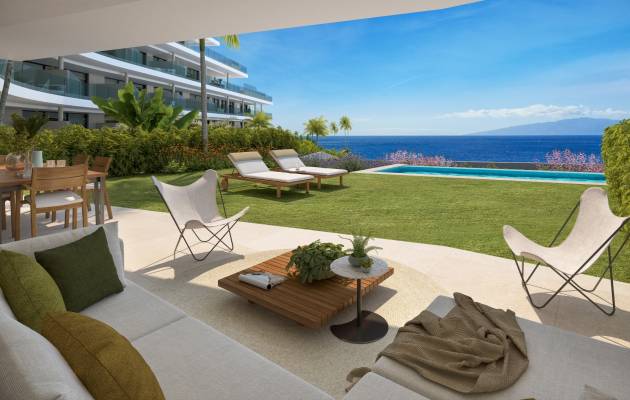
Serene, Rokabella Adeje
New development selected by DOM Tenerife. Plans, prices and availability sent the same day.
Explore the developmentBefore marketing, verify cadastral status (catastro) against the property deed and confirm no outstanding municipal charges or planning violations. Community of owners accounts (cuenta de la comunidad) must be inspected for arrears, litigation, or special assessments. Physical condition requires professional survey: photograph plumbing, electrics, roof, pool equipment, and façade in daylight, not marketing stills. Orientation matters: a south-facing terrace in July reaches 45°C; north-facing gardens offer shade but reduce value perception. Enquire whether the property holds a valid occupation license (licencia de ocupación) and whether any registered easements or restrictions limit future use. Many sellers overlook these details until negotiation stalls. A preliminary inspection report, commissioned before listing, accelerates buyer confidence and justifies pricing.
Resale villa purchases in the Canary Islands incur transfer tax (ITP) at 6.5%. New-build sales by developers carry IGIC at 7%, plus stamp duty (AJD) on the deed. Annual property tax (IBI) is based on cadastral value and paid quarterly; verify the seller’s last statement for accuracy. Non-resident sellers must be aware that the buyer withholds 3% of the total price (form 211) and remits it to the Spanish Tax Agency within one month—this is not a negotiable deduction. Municipal plusvalía tax (no longer applicable after 2022 constitutional ruling, but confirm with a local gestor) historically applied to gains; tax advice is essential. Sellers should appoint a gestor (tax advisor) before listing to model net proceeds and ensure compliance with all filing deadlines.
Accepting a deposit (señal) without a signed reservation agreement leaves the seller unprotected if the buyer withdraws; always formalise terms in writing. Relying on machine translations of the deed or contracts invites misunderstandings over liability, covenant, or fixture definitions. Ignoring community accounts and deferring dispute resolution until close of escrow creates financing delays and renegotiation leverage for the buyer. Overlooking property orientation when marketing to sunlight-sensitive buyers in a subtropical climate reduces appeal and negotiating position. Scheduling viewings only during daylight hours conceals noise, lighting, and pedestrian patterns that deter international purchasers accustomed to evening site visits. These errors compound; each multiplies friction and cost.
A professional sale cycle includes full cadastral and registry searches, certified translations of all deeds and community documents by a court-approved translator, notarial authentication of the deed (escritura), and registration of the new owner’s details at the Property Registry (Registro de la Propiedad). DOM Tenerife accompanies both parties through each stage, ensuring NIE (foreigner identification number) acquisition by the buyer, bank verification of funds, and timeline compliance with Spanish law. After closing, the seller remains liable for any tax filing omissions or community arrears accrued before the transaction; clear these before signature. Post-sale counsel includes capital gains reporting (if the seller is tax-resident elsewhere), form 211 submission, and confirmation of registry registration. This end-to-end support is what distinguishes advisory from transactional brokerage.
When the seller is non-resident, the buyer is required to withhold 3% of the purchase price and remit it to the Spanish Tax Agency (AEAT) within one month using form 211. This is a legal requirement, not a negotiable deduction, and protects the Spanish state’s tax position.
If selling a resale villa, the buyer pays transfer tax (ITP) at 6.5%. If the property is new-build and sold directly by the developer, IGIC applies at 7% plus stamp duty (AJD). The seller should consult a local gestor to model net proceeds and compliance obligations.
In Spain, the seller pays the agency commission. The percentage is agreed in writing in the listing agreement between the seller and the advisor before the property is marketed.
Yes, a foreign buyer must obtain an NIE (foreigner identification number) to complete a property purchase in Spain. Residency is not required; the NIE is a tax and legal identification number obtained through the Police.
Cadastral status (catastro) is the official municipal record of the property’s boundaries, use, and tax classification. It must match the deed; discrepancies can delay sales, affect financing, or trigger municipal charges. Always verify this before listing.
Community accounts reveal arrears, litigation, special assessments, or planned works that become the buyer’s liability. An inspection protects the seller from renegotiation and ensures transparent handover of liabilities before the deed is signed.
Without a written agreement, the seller has no legal recourse if the buyer withdraws, and dispute resolution becomes costly and uncertain. Always formalise terms in writing before accepting any deposit.
No. Machine translations are unreliable and may obscure critical terms over liability, covenants, or fixtures. Always use a court-approved legal translator to ensure accuracy and legal validity.
South-facing terraces can reach 45°C in summer, discouraging use; north-facing gardens offer shade but reduce buyer perception of value. Orientation affects both comfort and perceived lifestyle quality, influencing offer timing and terms.
DOM Tenerife confirms notarial registration, ensures the new owner’s details appear at the Property Registry, verifies form 211 submission if applicable, and advises on any capital gains reporting obligations depending on the seller’s tax residency.
Selling a luxury villa in south Tenerife safely requires legal rigour, international market insight, and hands-on counsel through every procedural stage. DOM Tenerife’s role is to verify every document, guide both parties through Spanish law, and protect your interests before, during, and after closing. We do not rush transactions; we build confidence through transparency. Contact us via WhatsApp +34 673 560 035 to discuss your sale and receive a detailed market assessment specific to your property.
Let’s talk whenever suits you
Video call, a meeting at our El Madroñal office, or WhatsApp on +34 673 560 035. We guide you from reservation to deed, in your language. DOM Tenerife — Buy safely.
Request informationMessage on WhatsApp#vender villa de lujo tenerife # tenerife luxury real estate # dom tenerife # south tenerife property
Phone
+34 922 089 199Mobile and whatsapp
+34 673 560 035
Address
Avenida Kurt Konrad Mayer 63, El Madroñal, 38660 Adeje, Santa Cruz de Tenerife, España.


