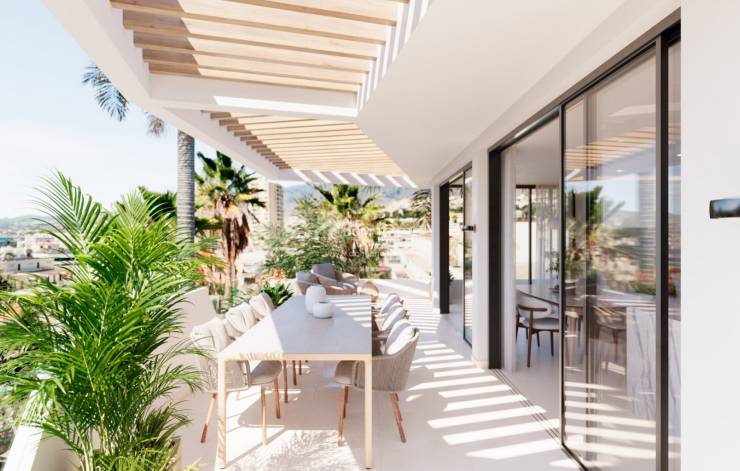
DOM Tenerife · Buyer insight
Financing a luxury property in Tenerife requires understanding Spanish mortgage law, tax obligations, and local conveyancing procedures. This guide walks international buyers through the financial and legal pathways to home ownership in Tenerife South.
Buyers of luxury homes in Tenerife South originate primarily from Northern and Central Europe, the United Kingdom, Belgium, and France, alongside purchasers from Russia and other established markets. The demographic has evolved from seasonal investors seeking second homes to a broader mix of owner-occupiers, remote workers, and long-term residents attracted by the year-round subtropical climate and established infrastructure in Costa Adeje, El Duque, and La Caleta. These buyers typically seek either direct oceanfront villas with private access or elevated positions in El Madroñal and Abama offering views across the Atlantic toward the African coast. Demand patterns have shifted toward properties requiring minimal renovation and turnkey readiness, alongside growing interest in new-build branded residences. This audience prioritises legal security, English-language support, and transparent transaction processes over marketing rhetoric.
Oceanfront villas in Costa Adeje and El Duque command the highest valuations, typically featuring private beaches, infinity pools, and southern aspects. Second-line apartments in Bahía del Duque and La Caleta occupy the mid-tier, offering sea views without direct beach access. Properties in El Madroñal and Roque del Conde, though elevated and with broad vistas, trade at lower price points than equivalent beachfront square metres. Contemporary build quality and architect-designed interiors correlate with premium pricing. Second-hand resales in established neighbourhoods like San Eugenio Alto retain value steadily. For current inventory across all three categories, DOM Tenerife maintains a portfolio reflecting this hierarchy. Prospective buyers should view properties across all tiers before deciding; photography often misrepresents distance to sea and orientation relative to afternoon sun.
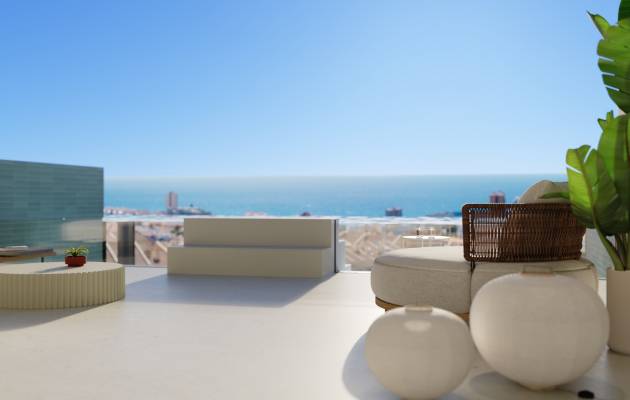
ENA Luxury Homes
New development selected by DOM Tenerife. Plans, prices and availability sent the same day.
Explore the developmentSpanish property ownership rests on a registered title (folio) held at the Land Registry (Registro de la Propiedad). Before purchase, verify the property’s urban classification at the municipal cadastre and confirm no outstanding planning violations or restrictive covenants affect use. Apartments and villas in communal developments are subject to community bylaws and maintenance charges (cuotas de comunidad), which cover upkeep of common areas, security, and utilities. Request five years of community accounts and any pending special works assessments. Physical inspection must include water pressure, air conditioning serviceability, roof condition, and pool pump systems; photographs alone cannot confirm working order. El Madroñal and Abama developments impose architectural controls over renovation and exterior modifications. Electrical and plumbing installations should be inspected by a qualified surveyor, as age and salt-air corrosion affect coastal properties.
Purchasing a resale home in the Canary Islands incurs transfer tax (ITP) at 6.5% of the agreed price. First purchases of new-build homes from the developer attract IGIC at 7%, plus stamp duty on the deed. Annual property tax (IBI) is levied by the municipal council and varies by location and cadastral value. When the seller is a non-resident, the buyer must withhold 3% of the purchase price and remit it via form 211 to the Spanish Tax Agency within one month. This withholding does not constitute a prepayment of the seller’s final tax liability but a mandatory deposit held by the state. Failure to withhold and report triggers penalties on the buyer. All these obligations should be managed by a qualified gestoría (tax and legal advisory firm) familiar with cross-border transactions. Timing of payments and coordination with the notary is essential to prevent delays in registry inscription.
Do not pay a deposit without a signed reservation agreement (contrato de reserva) detailing terms, refund conditions, and date of formalization. Do not rely on automated translations of the property deed; use a qualified legal translator to identify encumbrances and easements. Do not underestimate community fees by ignoring recent accounts; special assessments for lift repairs, waterproofing, or facade work are common in coastal properties exposed to salt and wind. Do not view properties only in daylight; evening and early morning visits reveal sun angle, noise from adjacent roads, and neighbouring construction. Do not sign any preliminary agreement in a language you do not read fluently. Do not assume the agent’s verbal assurances override the written contract; all undertakings must be in the deed and community bylaws. These oversights lead to surprise costs, legal disputes, and transaction delays.
DOM Tenerife provides multilingual legal verification throughout the purchase cycle. This includes full title search at the Land Registry, cadastral classification check, community accounts review, and confirmation of outstanding charges. Translation of all property documents into your language by a sworn translator (traductor jurado) ensures you understand every clause before signature. Accompaniment to the notary (notaría) in Costa Adeje covers execution of the deed, verification of identity, and explanation of all terms in English. After closing, we coordinate with the gestoría for IBI registration, community notice of change of ownership, and utility account transfers. Post-purchase surveys of building systems and community reserve fund adequacy are available. This continuity removes language barriers and ensures compliance with Spanish conveyancing law, protecting your investment from outset to occupation.
No. A foreign buyer needs only an NIE (foreigner identification number) to purchase property in Spain; residency is not required. The NIE is obtained from the Spanish National Police and simplifies all subsequent tax and legal filings.
When the seller is a non-resident, the buyer must withhold 3% of the purchase price and remit it to the Spanish Tax Agency via form 211 within one month. This is a mandatory deposit held by the state and does not reduce your total outlay; it must be accounted for separately from ITP tax.
ITP (transfer tax) at 6.5% applies to resale homes. IGIC (VAT equivalent) at 7% plus stamp duty applies to new-build homes sold directly by the developer. Both are charged on the purchase price; your legal adviser will confirm which applies to your specific property.
The seller pays the agency commission. The percentage is agreed in writing in the listing agreement and does not affect the buyer’s purchase price or closing costs.
No. Always insist on a signed reservation agreement (contrato de reserva) before paying any deposit. It must specify the property, price, refund conditions, cooling-off period, and date of formal deed execution at the notary.
Automated translations miss encumbrances, easements, and restrictive covenants that affect your use and enjoyment. A sworn translator ensures you understand every legal obligation before you sign.
Community fees (cuotas de comunidad) cover maintenance of common areas, security, and utilities. Special assessments for major repairs—lift overhauls, waterproofing, or facade work—are common in coastal properties and can amount to several thousand euros.
No. Evening and early morning visits reveal sun angle, noise from roads or neighbours, and construction activity. Do not make an offer based on daytime photographs alone.
We coordinate with the tax adviser for IBI registration, notify the community of ownership change, arrange utility transfers, and provide post-purchase property system surveys if requested. This continuity ensures your legal status and property management are properly established.
From signed reservation agreement to notary signature typically takes 4–8 weeks, depending on complexity of title, mortgage approval, and legal review. Registry inscription of your ownership follows within 1–3 months. DOM Tenerife manages each step to minimise delays.
Buying safely in Tenerife South means verifying every document, understanding every tax, and securing clear legal title before you sign. DOM Tenerife combines full document verification, multilingual legal translation, and notary accompaniment to protect your investment from first viewing to occupation. Contact us via WhatsApp +34 673 560 035 to discuss your purchase or sale.
Let’s talk whenever suits you
Video call, a meeting at our El Madroñal office, or WhatsApp on +34 673 560 035. We guide you from reservation to deed, in your language. DOM Tenerife — Buy safely.
Request informationMessage on WhatsApp#mortgage luxury property tenerife foreigner # tenerife luxury real estate # dom tenerife # south tenerife property
Phone
+34 922 089 199Mobile and whatsapp
+34 673 560 035
Address
Avenida Kurt Konrad Mayer 63, El Madroñal, 38660 Adeje, Santa Cruz de Tenerife, España.


