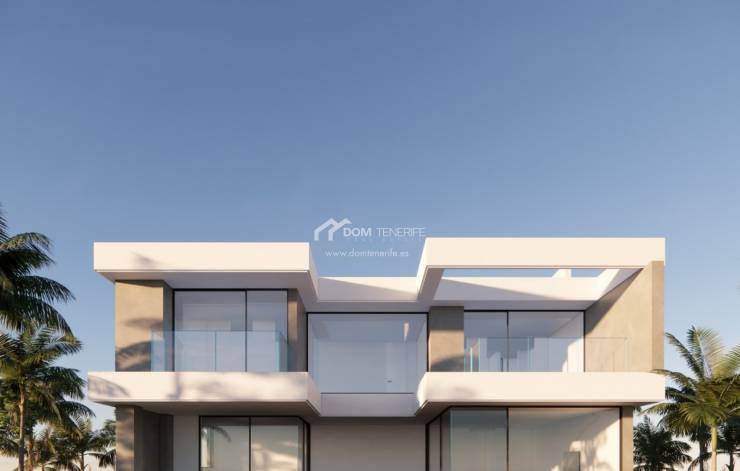
DOM Tenerife · Insight
The southern coast of Tenerife has matured into a closed-loop market where prime stock rarely surfaces. Into 2027, the interplay between scarcity, new-build timelines and international buyer demand—shaped by post-Brexit mobility rules, Canary Islands fiscal advantage and geographic proximity to Tenerife South airport—will define both opportunity and price trajectory.
El Madroñal, the gated hillside enclave above Costa Adeje, operates on ultra-low density; large plots mean few units trade annually. Abama, the Ritz-Carlton masterplan west of Adeje, sits inside a protected low-density framework that restricts new residential supply. El Duque and Bahía del Duque are essentially built out, with five-star hotels dominating the beachfront strip. La Caleta, the former fishing village transformed into a fine-dining address, remains conservation-limited, so new apartments are rare. The consequence is structural: new prime supply arrives chiefly through selective redevelopment within Costa Adeje proper and branded residences at Abama, not from greenfield expansion. Clean-title villas with unobstructed ocean views—rare commodities in these zones—command sustained value because replacement stock barely enters the market.
Discover the development in detail
Floor plans, specifications and current availability, sent by one of our advisors in your language.
See the developmentWhatsApp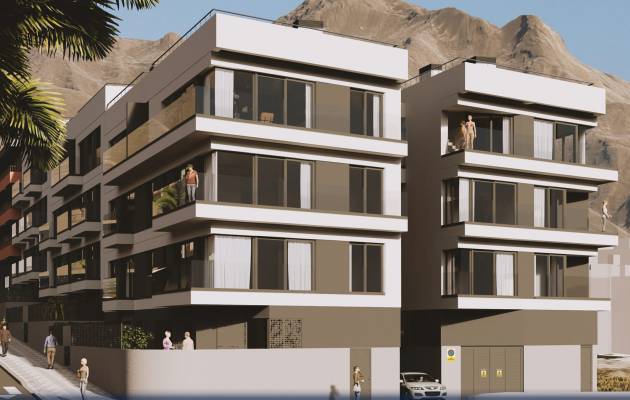
Abora by Metrovacesa in Playa Paraiso represents the main residential pipeline in the south, alongside branded residences at Abama and selective Costa Adeje redevelopment schemes. Delivery timelines have lengthened: planning review cycles, construction-cost pressures and supply-chain constraints now extend completions beyond initial forecasts. Buyers choosing off-plan must weigh the IGIC (Canary Islands indirect tax, lower than mainland VAT) advantage against extended holding periods and currency exposure. Finished stock in El Duque, El Madroñal and La Caleta avoids timeline risk but commands a premium reflecting immediate occupation and the scarcity of available homes. The decision hinges on capital deployment timescale: investors comfortable with phased drawdowns favour off-plan; owner-occupiers and those deploying capital in full typically prefer completed homes with open views ready for immediate use.
Post-Brexit British buyers navigate the Schengen 90-day-in-180 limit, spurring a cohort toward residency status to avoid repatriation rules; many favour El Duque or Bahía del Duque for proximity to five-star services and airport transfers under 30 minutes from Tenerife South. German and Scandinavian winter-base buyers seek established gated communities with reliable infrastructure—El Madroñal, Abama and Costa Adeje proper attract this segment. Swiss and Eastern European HNWI prioritise clean title, genuinely open ocean views (not obstructed), 24-hour security and school access. All cohorts demand the nota simple (title registry search) early in due diligence and completion sequences anchored to the NIE—the foreigner identification number mandatory before any transaction closes. Each buyer profile values the Canary Islands’ location: year-round mild subtropical climate, Atlantic setting, and Tenerife South airport accessibility.
El Madroñal villas with unobstructed panoramic ocean views and clean escrituras (notarial deeds) trade steadily; La Caleta seafront apartments with open sea exposure move within reasonable timeframes. Dated product, anything with boundary disputes, encroaching neighbours or unresolved title questions stalls indefinitely. The decisive filter is the nota simple—the search of the Registro de la Propiedad (property registry) that reveals liens, mortgages, pending litigation and ownership history. Buyers should commission this before making an offer; it typically surfaces the issues that freeze illiquid stock. El Duque beachfront commands consistent demand because five-star hotel proximity, security infrastructure and clear frontline positioning ensure buyer confidence. Resale cycles in these micro-zones have lengthened slightly due to buyer selectivity around title and view quality, but fundamentals remain sound: clean homes with open vistas in gated enclaves remain liquid relative to mainstream European markets.
The Canary Islands operate outside mainland Spanish VAT (IVA), instead applying IGIC—their own indirect tax, materially lower than peninsular rates. New-build purchases incur IGIC; resale transactions trigger ITP (transfer tax on the property itself). When a seller is non-resident, the buyer withholds tax under modelo 211, filed with the Spanish tax authority. The mandatory sequence: secure a reservation, obtain a NIE (foreign identification number, issued via the Delegación de Policía Nacional), commission the nota simple from the Registro de la Propiedad, instruct a notary for the escritura (notarial deed) and register the property at the Registro. The Canary Islands REF regime—encompassing the ZEC (Zona Especial Canaria) and RIC (Reserva para Inversiones en Canarias)—may benefit qualifying investors, though standard residential purchases operate within the standard IGIC and ITP framework. All timelines depend on NIE issuance; delays here ripple through notary and registry steps.
El Madroñal is a gated ultra-low-density enclave with large plots, so supply is structurally limited. Costa Adeje is essentially built out. La Caleta is conservation-restricted. Abama sits inside a protected low-density masterplan. New prime supply arrives chiefly through selective redevelopment and branded residences at Abama, not new land—which underpins values for clean-title homes with open views.
New-build purchases incur IGIC (Canary Islands indirect tax, well below mainland VAT). Resale transactions carry ITP (transfer tax on the property). When the seller is non-resident, modelo 211 (withholding tax) is filed by the buyer. All rates vary by circumstance; the Canary Islands REF regime may apply for qualifying investors.
Yes, a NIE (foreigner identification number) is mandatory before any purchase can complete. Issuance via the Delegación de Policía Nacional can take two to four weeks depending on local processing. Delays in obtaining the NIE directly delay the notary deed and property registry steps, so securing it early is critical to closing timelines.
DOM Tenerife specializes in verified acquisitions for international HNWI. We conduct full legal and document verification, accompany you through NIE registration, banking, notarial deed and registry inscription in English, French, German and Russian. Every property receives rigorous title review—nota simple, ownership history, encumbrances—before you commit. Contact us via WhatsApp +34 673 560 035 to discuss your Tenerife South purchase with certainty and multilingual support.
Let’s talk whenever suits you
Video call, a meeting at our El Madroñal office, or WhatsApp on +34 673 560 035. We guide you from reservation to deed, in your language. DOM Tenerife — Buy safely.
Request informationMessage on WhatsApp#tenerife real estate outlook 2027 # luxury property tenerife 2027 # costa adeje property 2027 # el madronal villas # abama branded residences
Phone
+34 922 089 199Mobile and whatsapp
+34 673 560 035
Address
Avenida Kurt Konrad Mayer 63, El Madroñal, 38660 Adeje, Santa Cruz de Tenerife, España.