DOM Tenerife · Insight
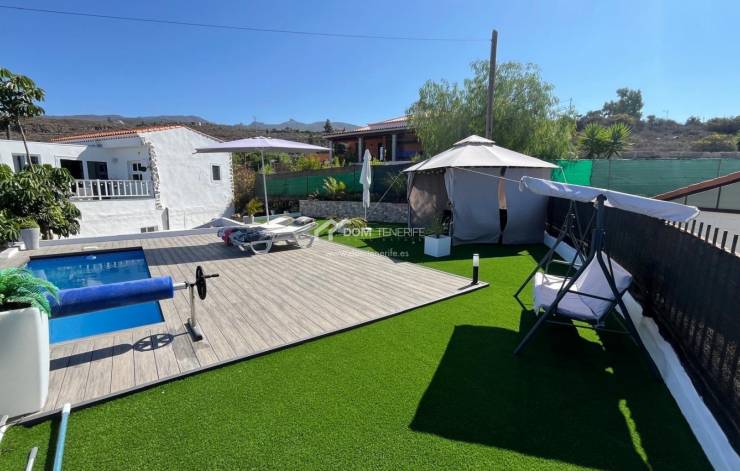
Adeje remains the principal hub for ultra-high-net-worth property acquisition across Tenerife’s south coast. The demand from Northern European, Central European and British investors for standalone villas and chalets—particularly those commanding unobstructed sea views—continues to sustain steady appreciation in this established enclave.
The typical purchaser of luxury villas in Adeje is a non-resident, high-net-worth individual aged 45–70, predominantly from Germany, Scandinavia, the United Kingdom, and Austria. British buyers represent the single largest national cohort, followed by German-speaking investors seeking year-round subtropical climate exposure without Mediterranean taxation burdens. These acquisitions are commonly financed through corporate structures or trusts registered in offshore jurisdictions. Over the past five years, median asking prices for four-bedroom villas with sea views in Costa Adeje and El Duque have moved upward in absolute terms, driven by restricted supply of beachfront or elevated-prospect inventory and sustained demand from retirees and second-home buyers. Supply remains constrained by planning permission scarcity in premium micro-zones such as El Madroñal, where resident-count regulations limit new construction.
Discover the development in detail
Floor plans, specifications and current availability, sent by one of our advisors in your language.
See the developmentWhatsApp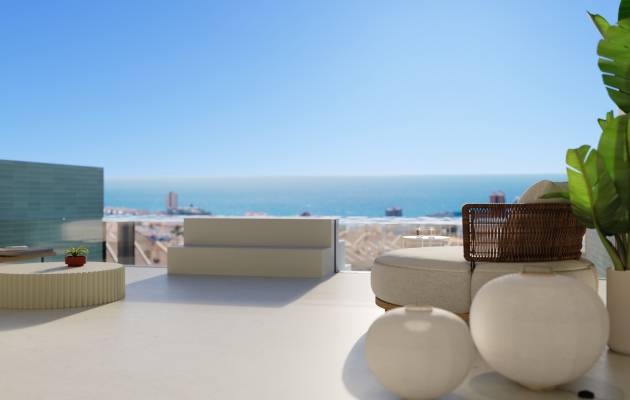
Premium villas with direct or lateral sea views—typically four to five bedrooms with private pools, mature landscaping and gated access—command the highest valuations. Penthouses and first-line coastal apartments, often featuring communal amenities and concierge services, occupy a secondary price tier. Second-line apartments, located one to two blocks inland from the waterfront, represent entry-level luxury in Adeje. Specific pricing bands must reflect current market conditions and individual property characteristics, including aspect, plot size, renovation date and pool facilities. Properties in Abama’s branded developments or established Costa Adeje residential complexes command premiums over comparable standalone units owing to integrated security, landscaping maintenance and resort-standard amenities. Orientation—south-facing versus west-facing—materially influences desirability and seasonal usability.
Every villa purchase requires verification of the property’s folio in the Registro de la Propiedad (Land Registry). Confirm that the property carries a valid building permit (Licencia de Obra) and completion certificate (Cédula de Habitabilidad or Declaración de Conformidad). Identify any pending municipal charges, easements or rights of way that might encumber the title. For communal properties—particularly first-line apartments—obtain the full statutes and minutes of the homeowners’ assembly for the preceding three years, plus current reserve fund and maintenance budget. Site inspection must include drainage inspection, roof condition assessment and structural surveys. Many older villas in Costa Adeje were completed in the 1990s; despite professional photography, underlying systems (plumbing, electrical installations, HVAC) require independent technical evaluation. Obtain a detailed inventory of chattels included in the sale.
Purchase tax treatment depends on property class: new builds attract value-added tax (IVA) at standard rate on the developer’s margin, whereas resale properties incur transfer tax (ITP—Impuesto sobre Transmisiones Patrimoniales) at the Canary Islands rate. Non-resident vendors are subject to a mandatory three per cent withholding on gross sale price, remitted by the notary directly to the regional tax authority. Compute municipal capital gains tax (Plusvalía) using the cadastral value increment since last transfer; this is separate from national income tax. Annual property tax (IBI—Impuesto sobre Bienes Inmuebles) is modest by European standards but varies by municipality and declared cadastral value. Buyers should file a model 211 return within 30 days of closing. Establish a Spanish tax identification number (NIE) before closing; non-residents must register for property income tax reporting, even if the property remains vacant.
Do not pay any reservation deposit without a signed, notarised reserve contract (Contrato de Reserva) specifying conditions of cancellation, deposit forfeit triggers and timeline to exchange the purchase deed. Never rely upon informal translations of contracts or the vendor’s interpretation of penalty clauses. Underestimate the true cost of community fees and special assessments; request five years of audited accounts from the homeowners’ association. Ignore the property’s aspect at your peril: a north-facing villa in El Madroñal receives minimal winter sun, affecting both comfort and resale. Avoid viewing properties after sunset; poor lighting obscures structural defects, damp patches and window condition. Engage a qualified surveyor before exchange; photograph every room and utility area in natural daylight. Confirm utility connections are formalised with supplier companies (water, electricity, gas) and account balances are zero.
DOM Tenerife conducts full notarial verification before exchange: registry searches, tax clearance checks, utility account status and community fund compliance. All contracts are translated into your preferred language by qualified legal practitioners; our multilingual accompaniment extends through NIE registration, bank account opening (where required), notarial signature and registry recording. We liaise with your private wealth advisor or corporate structure administrator to ensure fiscal compliance in your home jurisdiction. Post-closing, we coordinate property registration updates, meter readings and account transfers. Annual IBI payments and community fee receipts are monitored; we advise on maintenance scheduling and coordinate with local vendors. Should you require rental management or lettings administration, we maintain verified service provider networks across Costa Adeje and El Duque, ensuring your investment is actively maintained and optimised.
An oral or informal deposit leaves you unprotected if the vendor changes terms or cancels. A notarised reserve contract (Contrato de Reserva) specifies exact conditions, timelines, and what triggers forfeiture of your deposit. Without it, Spanish law may treat your payment as a unilateral gift.
Only notarised legal translations are enforceable in Spanish proceedings. Informal translations may obscure clauses on penalty payment, completion timelines or defects liability. The notary will require an official translation before executing the deed; paying twice for translation is avoidable through professional engagement upfront.
Community fees vary widely: first-line apartments in Costa Adeje may incur €300–€600 monthly, while standalone villas in gated developments run €150–€400. Special assessments for roof repairs or elevator maintenance can add thousands; always request audited accounts for five prior years to see true cost history.
South and southeast-facing properties receive winter sun and warmth; north-facing units in El Madroñal remain cool and shaded. Summer sun exposure matters less on the Atlantic coast, but winter months are crucial. Inspect the same property at dawn and mid-morning to confirm actual light levels.
Artificial lighting hides damp stains, cracks, poor window seals and structural settlement. Viewing in daylight reveals condensation patterns, water ingress and wall condition that determine repair costs. Always photograph interiors in natural light and revisit at different times before making an offer.
IVA (value-added tax) applies to new builds purchased from developers; ITP (transfer tax) applies to resale properties. ITP rates in the Canary Islands are lower than mainland Spain. Non-resident vendors face a three per cent withholding on sale price, handled by the notary.
Plusvalía is municipal capital gains tax, calculated on the cadastral value increase since the property’s last recorded transfer. The municipality assesses it based on official land value registers; it is distinct from national income tax and notary fees. Request a pre-closing estimate from the ayuntamiento.
Yes, IBI (property tax) is payable annually to the municipality. Rates vary by council and declared cadastral value, typically representing a small percentage of registered value. Non-residents must register and pay via a Spanish bank account or authorised representative.
Form 211 notifies Spanish tax authorities of the property purchase. Non-resident buyers must file within 30 days of notarial closure. Failure to file triggers penalties; your notary or tax advisor will guide you through completion.
If the seller is a non-resident, the notary withholds three per cent of the gross sale price and remits it directly to the tax authority. As a buyer, you are not liable, but it affects the vendor’s net proceeds. Ensure this is factored into price negotiations.
We conduct registry searches, tax clearance verification, utility account status checks and community fund compliance audits before exchange. All contracts are professionally translated, and we accompany you through NIE registration, bank setup, notary signature and registry recording to ensure full legal compliance.
We coordinate meter readings, utility account transfers, annual IBI payments and community fee schedules. We maintain verified service provider networks for maintenance, repairs and rental management across Costa Adeje and El Duque, ensuring your property remains optimised long-term.
DOM Tenerife Real Estate is committed to ’Buy Safely’: every acquisition is protected by comprehensive legal verification, notarised contract translation, multilingual accompaniment through all regulatory processes, and sustained post-closing support. We navigate NIE registration, bank accounts, notarial execution and registry recording on your behalf, ensuring your ultra-high-net-worth investment is secure and tax-compliant. For a confidential consultation regarding luxury villa acquisition in Adeje, Costa Adeje, El Duque, El Madroñal or Abama, contact us via WhatsApp +34 673 560 035.
Let’s talk whenever suits you
Video call, a meeting at our El Madroñal office, or WhatsApp on +34 673 560 035. We guide you from reservation to deed, in your language. DOM Tenerife — Buy safely.
Request informationMessage on WhatsApp#chalets y villas de lujo en venta en adeje tenerife # tenerife luxury real estate # dom tenerife # south tenerife property # hnwi tenerife buyer
Phone
+34 922 089 199Mobile and whatsapp
+34 673 560 035
Address
Avenida Kurt Konrad Mayer 63, El Madroñal, 38660 Adeje, Santa Cruz de Tenerife, España.