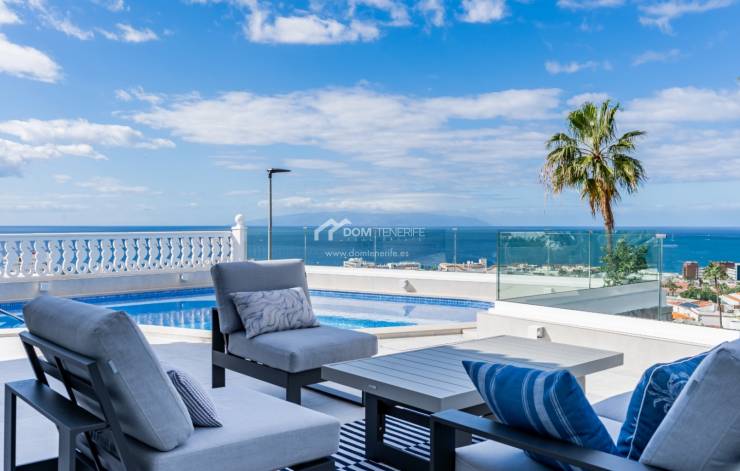
DOM Tenerife · Buyer insight
San Eugenio Alto and San Eugenio Bajo occupy adjoining slopes on Tenerife’s south coast, yet their elevation difference creates distinct property markets. Understanding the topography, pricing structure and legal framework of each zone is essential before committing to purchase.
Properties in San Eugenio Alto and Bajo attract established European buyers seeking second residences or retirement homes with reliable weather and established infrastructure. Demand originates from Northern and Central Europe, the United Kingdom, France, Belgium and Russia—buyers accustomed to regulated property markets and transparent legal processes. Over the past decade, demand has shifted from purely seasonal occupancy toward longer-term holds, particularly among buyers seeking exposure to the Canary Islands’ non-resident tax advantages and the Atlantic’s year-round subtropical climate. The buyer profile has also evolved toward smaller, fully serviced apartments in lower-density settings, reflecting preferences for manageable properties with professional community management. Brexit has reinforced demand from UK nationals seeking EU-adjacent residency with straightforward legal pathways through the NIE (foreigner identification number) registration process.
San Eugenio Alto commands higher valuations per square metre due to its elevated position offering unobstructed Atlantic views and separation from beach-level noise and tourism intensity. Detached villas with sea views occupy the apex of the market, commanding premium prices reflective of their rarity and design flexibility. Below these sit hillside apartments in gated compounds—typically two to three bedrooms with communal amenities, pools and landscaped grounds. San Eugenio Bajo encompasses beachside apartments and townhouses closer to commercial activity, priced below their Alto counterparts. DOM Tenerife currently lists 10 homes in San Eugenio Alto, ranging from €340,000 to €2,700,000 with a median asking price of €2,600,000. For precise market positioning within your target zone, consultation with our advisors remains essential.
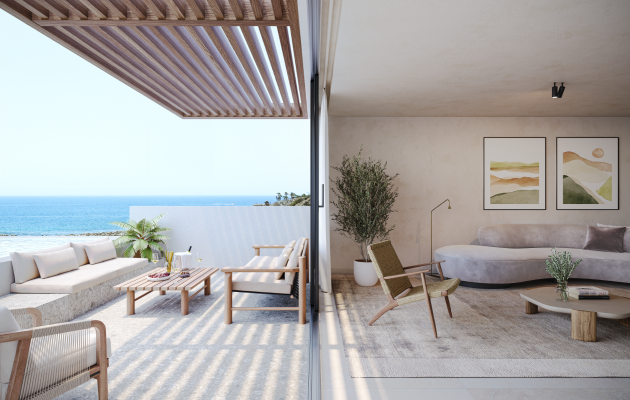
ICONIC Tenerife · Fase 3
New development selected by DOM Tenerife. Plans, prices and availability sent the same day.
Explore the developmentBoth zones fall within established residential areas with completed infrastructure—water, electricity, telecommunications and waste management are operational and maintained. Cadastral records (Catastro) must be consulted to verify plot boundaries, building footprint and any registered encumbrances affecting the property. Properties typically belong to communities of owners (comunidades de propietarios) responsible for maintaining common areas, insurance and reserve funds. On-site inspection reveals the true condition of mechanical systems—air conditioning units, plumbing, electrical panels and generators—which photographs cannot convey. San Eugenio Alto’s elevated terrain requires careful assessment of structural integrity on slopes. Request detailed community minutes from the past two years to identify pending repairs, disputes or special assessments. Professional surveying and cadastral review prevent costly surprises post-purchase.
Resale homes in the Canary Islands incur transfer tax (ITP) at 6.5% of the purchase price, calculated on the higher of the agreed price or the notarial valuation. New-build properties from a developer carry IGIC (7%) plus stamp duty (AJD) on the deed. When the seller is non-resident, the buyer must withhold 3% of the price and remit it to the Spanish Tax Agency (AEAT) via form 211 within one month—a mandatory step to avoid joint liability. Municipal property tax (IBI) is levied annually based on the cadastral value. Capital gains tax (plusvalía municipal) applies only if the seller has owned the property fewer than five years; after that threshold, the calculation differs. Commission paid to advisors is negotiated in writing at the point of listing and is paid by the seller, not the buyer. Engage a Spanish gestoría (fiscal advisor) early to model your exact tax position.
Do not pay a reservation deposit without a signed, legally binding reservation agreement specifying cancellation terms, deposit forfeiture conditions and completion timelines. Avoid relying on translations by friends or online tools for the compraventa (purchase deed); only official notarial translations carry legal weight in Spain. Underestimating community fees is a frequent oversight—request detailed budgets and reserve fund statements before signing. Ignoring property orientation (south-facing apartments receive year-round afternoon sun; north-facing units stay cooler but may lack light) leads to post-purchase regret. Never view the property at night or in poor weather; return multiple times, at different hours, to assess noise, light, access and neighbour activity. Thorough due diligence at the viewing stage prevents costly renegotiations or disputes later.
Before signature, all underlying deeds, community regulations, energy certificates, urban planning clearances and liens must be reviewed by a Spanish lawyer. Official translation of all foreign-language documents is mandatory and must be certified by a sworn translator (traductor jurado). The notary (notario) conducts the final verification, confirms identity via NIE, witnesses signatures and submits the deed to the Land Registry (Registro de la Propiedad). Post-completion, transfer of utilities (electricity, water, gas, community fees) and update of the cadastral register ensure you are registered as the lawful owner and avoid disputes over former occupant obligations. DOM Tenerife accompanies clients through every stage—notary attendance, utility handover coordination and registry confirmation—ensuring nothing is overlooked. This structured approach protects your investment and guarantees clean, transferable title.
Form 211 is filed with the Spanish Tax Agency when purchasing from a non-resident seller. The buyer withholds 3% of the purchase price and remits it within one month of completion. Your gestoría (fiscal advisor) handles the filing; failure to comply creates joint liability for both buyer and seller.
Resale properties in the Canary Islands are taxed at 6.5% transfer tax (ITP), calculated on the higher of the agreed purchase price or the notarial valuation. New-build homes carry 7% IGIC plus stamp duty instead. Confirm the exact rate with your gestoría based on the property’s status.
IGIC (7%) applies to first sales of new-build homes directly from the developer, plus stamp duty (AJD) on the deed. Resale homes fall under the lower 6.5% ITP regime. Your advisor will clarify whether your property qualifies as new-build based on its completion date and registration history.
In Spain, the seller pays the agency commission. The percentage is negotiated and fixed in writing in the seller’s listing agreement with the advisor. Commission does not come from the buyer’s funds; it is deducted from the sale proceeds.
No. Foreign buyers require only an NIE (foreigner identification number) issued by the National Police (Policía Nacional). Residency and employment are not prerequisites; the NIE is obtained during the purchase process and is valid indefinitely.
As of October 2026, DOM Tenerife lists 10 homes in San Eugenio Alto with asking prices ranging from €340,000 to €2,700,000 and a median price of €2,600,000. Consult our advisors directly for current availability and detailed property specifications in your target range.
A verbal or informal deposit leaves you unprotected if the seller withdraws or disputes the terms. A signed, legally binding reservation agreement must specify the deposit amount, cancellation conditions, forfeiture terms and firm completion date. Your lawyer should review it before any funds change hands.
No. The Spanish notary and Land Registry accept only certified translations by a sworn translator (traductor jurado). Unofficial translations have no legal standing and may invalidate your claim to ownership. Budget for professional notarial translation as a non-negotiable cost.
Photographs and estate agent descriptions cannot reveal the condition of air conditioning, plumbing, electrical panels or generators. Visit the property multiple times at different hours, request access to mechanical rooms and ask for service records. A professional surveyor can assess structural integrity, especially on sloped terrain like San Eugenio Alto.
The notary (notario) verifies your NIE, confirms both parties’ identities, witnesses signatures on the compraventa (purchase deed), checks for liens or disputes and submits the deed to the Land Registry (Registro de la Propiedad). The notary is an independent officer of the court, not either party’s representative, and ensures legal compliance.
San Eugenio Alto and Bajo offer distinct living environments, each with transparent legal requirements and measurable advantages for European buyers. DOM Tenerife’s commitment is to Buy Safely: every transaction includes complete document verification, sworn legal translation, attendance at the notary and post-completion registry confirmation. We guide you through the NIE process, community inspections, tax planning and utility transfers, ensuring no step is overlooked. Contact our multilingual advisors today via WhatsApp +34 673 560 035 to discuss your specific requirements and arrange a detailed consultation.
Let’s talk whenever suits you
Video call, a meeting at our El Madroñal office, or WhatsApp on +34 673 560 035. We guide you from reservation to deed, in your language. DOM Tenerife — Buy safely.
Request informationMessage on WhatsApp#propiedades en san eugenio alto # tenerife luxury real estate # dom tenerife # south tenerife property # hnwi tenerife buyer
Phone
+34 922 089 199Mobile and whatsapp
+34 673 560 035
Address
Avenida Kurt Konrad Mayer 63, El Madroñal, 38660 Adeje, Santa Cruz de Tenerife, España.


