DOM Tenerife · Buyer insight
The opening price of a luxury villa determines not only the speed of sale but the confidence and seriousness of inquiry. In Tenerife’s southern markets—Costa Adeje, El Duque, Abama, El Madroñal—an overpriced listing stalls; an underpriced one leaves equity on the table. This guide addresses valuation fundamentals, tax obligations, and the legal protections that anchor a successful transaction.
The core buyer in Costa Adeje, El Duque and Abama is the Northern and Central European resident—German, Swiss, Belgian, Dutch, Scandinavian—alongside UK and French purchasers. These buyers seek second residences or relocations, drawn by the subtropical climate, established residential infrastructure and proximity to financial centres. Russian and Middle Eastern interest has remained steady. Over the past decade, buyer preference has shifted from pure beachfront intensity toward residential communities with defined amenities: Bahía del Duque, Abama’s branded residences, and gated zones such as El Madroñal now attract those valuing privacy and managed common areas as much as sea views. The buyer profile reflects stability rather than speculation; typical holding periods extend to ten years or longer. Professional advisors increasingly mediate these acquisitions, reflecting the scale of purchase and the need for multilingual, cross-border legal and fiscal guidance.
In Tenerife South, villa pricing reflects three clear bands. Oceanfront villas with direct beach or pool terraces overlooking the Atlantic command the highest valuations—this tier spans properties in Playa Paraíso, Golf del Sur’s waterfront plots and select Abama addresses. First-line apartments in tower developments such as those clustered in El Duque and La Caleta occupy a middle band; they offer sea views, building amenities and lower maintenance profiles than standalone villas. Secondary-line properties—situated in El Madroñal, Roque del Conde, Golf Costa Adeje and San Eugenio Alto—trade at a lower gradient; they appeal to buyers prioritising community facilities and off-street parking over unobstructed ocean vistas. Each band reflects distinct buyer intent and holding cost. DOM Tenerife’s current portfolio illustrates this hierarchy across all three categories; your advisor will position your property within the correct band based on location, orientation and access to amenities.
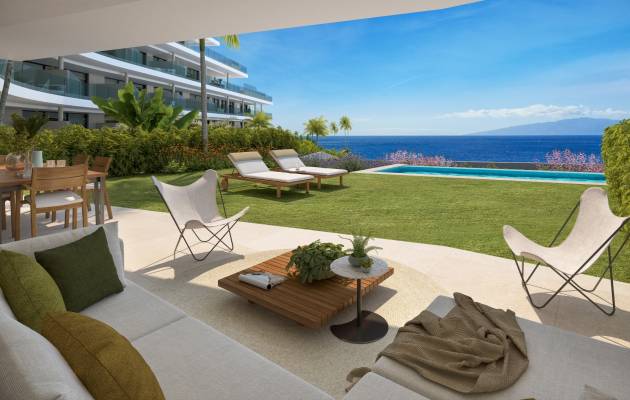
Serene, Rokabella Adeje
New development selected by DOM Tenerife. Plans, prices and availability sent the same day.
Explore the developmentBefore setting price, verify your property’s land registry entry (Catastro) against the deed. Check planning classification: is the property residential (vivienda unifamiliar) or resort-aligned (destino turístico)? Confirm there are no outstanding urbanisation charges or pending works. For apartments, review the community of owners’ (comunidad de propietarios) financial reserves, meeting minutes and any pending special assessments for façade work or lift maintenance. Visual inspection alone misleads; commission a professional survey to assess the actual condition of pool installations, electrics, plumbing and structural elements. Coastal salt air accelerates corrosion; verify external woodwork, metalwork and drainage systems. A property priced without this foundation invites renegotiation once the buyer’s own advisor flags defects. Transparency about condition—backed by documentary evidence—anchors confidence and justifies your opening valuation.
Canary Islands tax treatment differs from mainland Spain. A resale villa is taxed under ITP (transfer tax) at 6.5% on the purchase price; this is paid by the buyer. A new-build property carries IGIC at 7%, plus stamp duty (AJD) on the deed—also paid by the buyer. As seller, you may face municipal capital gains tax (plusvalía municipal) calculated on the increase in land value since your purchase; rates vary by municipality. If you are a non-resident, the buyer must withhold 3% of the price and remit it to the Spanish Tax Agency (AEAT) via form 211 within one month—this is a legal obligation, not optional. Your listing price must account for this if you are non-resident, as it reduces net proceeds. A qualified gestor (tax advisor) will confirm your liability and the timing of payments. Clarity on tax before pricing ensures no surprises at completion.
Paying a deposit without a signed reservation agreement (contrato privado) exposes you to disputes over terms and timeline. Accepting a verbal valuation or relying on outdated comps invites later challenge. Signing an incomplete listing agreement with unclear commission terms—typically paid by the seller, agreed in writing—courts future conflict with your advisor. Assuming the property’s community reserves are adequate without inspecting audit statements and reserve fund calculations risks revelation of a special assessment mid-sale, collapsing the buyer’s financing. Ignoring orientation—north-facing villas command less premium than south or southwest exposures—means underselling. Viewing the property only in daylight obscures noise from nearby roads, clubs or services. Finally, translating the deed yourself rather than engaging a legal translator introduces gaps that notaries will flag, delaying completion. Each omission weakens your starting position and prolongs the sale cycle.
From first price to closing, DOM Tenerife accompanies the seller through full document audit. We verify the deed (escritura) against the land registry, confirm building permits and occupancy certificates, and review all community governance documents. We engage a qualified legal translator for Spanish-language instruments, ensuring your buyer’s legal team receives documents that pass notarial and bank scrutiny without revision. We represent your interests at the notary’s office (notaría), explaining process and timeline. After completion, we support you with the registry filing and any tax filing deadlines your gestor identifies. This support holds particular value for non-residents: the 3% withholding form 211 must be filed within one month of sale; we confirm compliance. Non-resident buyers must obtain an NIE (foreigner identification number) to acquire the property—residency is not required, but the NIE is mandatory for the purchase deed and future tax filings. This end-to-end verification protects your proceeds and ensures a clean handover.
The primary buyers are Northern and Central European residents—German, Swiss, Belgian, Dutch, Scandinavian—alongside UK and French purchasers, seeking second residences or relocations. Over the past decade, buyer preference has shifted from pure beachfront intensity toward gated communities with managed amenities such as El Madroñal and Abama’s branded residences, reflecting a focus on privacy and long-term holding rather than speculation.
Price divides into three bands: oceanfront villas in Playa Paraíso and Golf del Sur command the highest valuations; first-line apartments in El Duque and La Caleta occupy a middle tier; secondary-line properties in El Madroñal, Roque del Conde and Golf Costa Adeje trade lower, appealing to buyers prioritising community facilities over sea views. DOM Tenerife’s portfolio illustrates this hierarchy for your reference.
Verify your Catastro entry against the deed, confirm residential classification, and check for outstanding urbanisation charges. For apartments, review the community of owners’ financial reserves and meeting minutes. Commission a professional survey to assess actual condition of pools, electrics and structural elements, as visual inspection alone misleads; coastal salt air accelerates corrosion.
You may face municipal capital gains tax (plusvalía municipal) on the increase in land value. Your buyer pays ITP (6.5% on resale) or IGIC (7% on new-build). If you are non-resident, the buyer withholds 3% of the price and remits it to the Spanish Tax Agency via form 211 within one month; this reduces your net proceeds and must be accounted for in your price.
A deposit without a signed agreement (contrato privado) leaves terms and timeline open to dispute and exposes you to renegotiation. A formal agreement protects both parties, clarifies contingencies and locks the sale timeline.
The agency commission is paid by the seller; the percentage is agreed in writing in the listing agreement. Terms are negotiable and must be stated clearly to avoid future conflict.
We audit the deed against the land registry, confirm building permits and occupancy certificates, engage a qualified legal translator for Spanish instruments, and represent your interests at the notary’s office. For non-residents, we ensure the 3% form 211 withholding is filed within one month and that your buyer obtains their mandatory NIE.
No. Foreign buyers must obtain an NIE (foreigner identification number), but residency is not required. The NIE is mandatory for the purchase deed and future tax filings; it is straightforward to obtain through the Policía Nacional.
Setting the right opening price safeguards both your timeline and your proceeds. At DOM Tenerife, we advise sellers through complete land registry verification, transparent tax planning and full legal accompaniment—from first price to notary signature to post-sale compliance. Our commitment to you is ’Buy safely’: every transaction backed by document verification, professional translation, and multilingual guidance. Contact us via WhatsApp +34 673 560 035 to discuss your villa’s valuation and sale strategy.
Let’s talk whenever suits you
Video call, a meeting at our El Madroñal office, or WhatsApp on +34 673 560 035. We guide you from reservation to deed, in your language. DOM Tenerife — Buy safely.
Request informationMessage on WhatsApp#luxury villa valuation tenerife # tenerife luxury real estate # dom tenerife # south tenerife property
Phone
+34 922 089 199Mobile and whatsapp
+34 673 560 035
Address
Avenida Kurt Konrad Mayer 63, El Madroñal, 38660 Adeje, Santa Cruz de Tenerife, España.


