DOM Tenerife · Buyer insight
El Duque has established itself as the principal address for international property acquisition in Tenerife South, drawing buyers from Northern and Central Europe, the UK, and beyond. This guide addresses the essential legal, fiscal and practical considerations for acquiring residential property in this established zone.
El Duque attracts international buyers predominantly from Northern Europe, Central Europe, the United Kingdom, Belgium, France and Russia. This demographic has remained consistent over successive market cycles, though the composition has shifted subtly as currency valuations and domestic fiscal climates have evolved in source markets. Buyers in this segment typically seek established, completed residences with professional management, proximity to amenities such as Bahía del Duque and direct access to resort infrastructure. Demand from UK and Northern European sources has historically dominated acquisitions, while interest from Central European and Russian buyers has grown steadily relative to supply. The market reflects a preference for turnkey properties requiring minimal renovation, suggesting a buyer profile oriented toward immediate occupancy and professional property oversight. Market enquiries remain consistent year-round, though seasonal peaks correspond to European winter months. The evolution toward larger, fully serviced residential complexes with integrated leisure facilities indicates a gradual shift from traditional villa acquisition toward managed apartment portfolios.
El Duque properties divide into three principal categories, each commanding distinct market positioning. Oceanfront and elevated villas with sea views occupy the highest tier, typically commanding prices substantially above the broader zone average due to privacy, plot size and unobstructed Atlantic vistas. Penthouses and first-line apartments occupy an intermediate position, offering professional management and shared amenities while maintaining direct or near-direct sea exposure. Standard apartments on secondary streets represent the entry-level category, maintaining proximity to Bahía del Duque and the promenade whilst occupying less elevated price points. This hierarchy reflects not only location and view premium but also plot cost, structural complexity and service provision. Properties in managed complexes with 24-hour security, landscaping maintenance and recreational facilities command sustained premiums over standalone units. Current DOM Tenerife listings in El Duque reflect this stratification across all categories. Specific valuations depend on precise location within the zone, aspect, renovation status and community conditions. Prospective buyers are advised to review the active portfolio to assess current asking prices within each category.

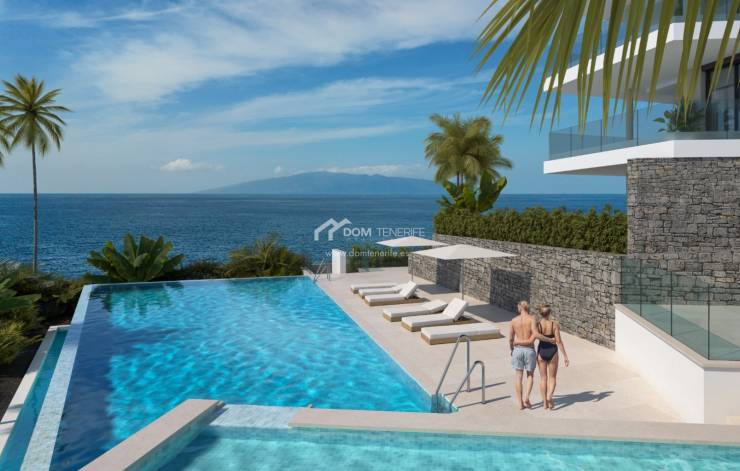
Siam Gardens Villas
New development selected by DOM Tenerife. Plans, prices and availability sent the same day.
Explore the developmentBefore proceeding with any offer, obtain the full property file from the land registry (Catastro), which establishes ownership history, plot boundaries and any registered encumbrances. Urban classification and planning restrictions must be verified through the municipal planning office; El Duque is fully consolidated, but restrictions on future modification or commercial use apply. Obtain the minutes of recent owner-association meetings and audit reports to assess reserve fund adequacy and outstanding liabilities. Many El Duque properties, particularly those near Bahía del Duque, are subject to community charges covering security, landscaping, water treatment and infrastructure maintenance; these vary substantially by development. Physical inspection at daylight during multiple visits is essential: photograph plumbing fixtures, electrical panels, terrace sealant, air-conditioning units and structural cracks. Obtain independent technical reports for properties over twenty years old. Photographs and marketing materials routinely mask deferred maintenance, water ingress, rusted balcony railings and deficient lifts. Request utility bills for twelve months prior to establish realistic running costs.
Purchase taxation in the Canary Islands depends on property status. For resale homes (second-hand), transfer tax (ITP) is levied at 6.5% of the declared purchase price. For new-build properties sold directly by the developer, IGIC (goods and services tax) applies at 7%, together with stamp duty (AJD) on the deed. When the seller is a non-resident (a frequent scenario in El Duque), the buyer is obliged to withhold 3% of the purchase price and remit it to the Spanish Tax Agency (Agencia Tributaria) using form 211 within one month. Municipal property tax (IBI) varies annually by cadastral value; request current year assessments from the seller. Capital gains tax (plusvalía municipal) may apply if the seller is an individual; this is calculated on the increase in cadastral value since the last transfer. Commission is paid by the seller and is agreed in writing in the listing contract; it does not form a separate cost to the buyer. Engage a tax advisor (gestor) to review your specific transaction, as relief mechanisms and declarations may apply.
Do not pay a deposit (señal) without a signed, notarised reservation contract that specifies conditions, timeline and remedy for breach. Never assume that translated documents are legally equivalent; hire a qualified legal translator for all binding instruments. Underestimating community charges is a frequent miscalculation; request three years of statements and confirm that reserves are adequately funded. Property orientation profoundly affects light, privacy and noise exposure; a south-facing penthouse receives afternoon glare and high cooling costs, whilst north-facing units on lower storeys may lack direct sunlight. Avoid viewing properties during evening or night hours, when defects in natural light and noise intrusion become invisible. Do not waive the right to conduct a building survey. Postponing the NIE application or assuming residency is required delays the entire transaction; obtain your foreigner identification number (NIE) before entering into any binding agreement. Do not rely on verbal assurances regarding future infrastructure projects, management changes or service improvements.
DOM Tenerife’s acquisition protocol ensures that every title deed, ownership document, fiscal certificate and planning file is reviewed for authenticity, completeness and alignment with the declared property. We commission independent legal translation of all binding documents—escritura (deed), power of attorney, community bylaws and IBI assessments—to English, German, French or Russian as required. Our advisors accompany you to the notary (notaría) for the final deed signature, ensuring that all conditions are met, taxes are computed correctly and your NIE is registered with the property registry. Following completion, we coordinate property registration, utility account transfers, fiscal declarations and community notification. Post-acquisition support includes liaison with community administrators regarding maintenance schedules, reserve contributions and governance queries. We retain documentation in a secure archive and provide annual fiscal summaries for your personal taxation jurisdiction. This end-to-end accompaniment eliminates the gaps that commonly result in unexpected tax bills, registry delays or administrative penalties.
When a property seller is a non-resident (not registered as a Spanish tax resident), Spanish law requires the buyer to withhold 3% of the purchase price and remit it to the Spanish Tax Agency (Agencia Tributaria) using form 211 within one month of completion. This protects the Spanish state against non-resident sellers avoiding capital gains tax. Your legal advisor will calculate and manage this obligation.
ITP (transfer tax) at 6.5% applies to resale homes—properties previously owned. IGIC (goods and services tax) at 7% applies to new-build properties sold directly by the developer, and is accompanied by stamp duty (AJD) on the deed. The tax regime depends entirely on the property’s status at the moment of your purchase. Your gestor will confirm which applies to your transaction.
Yes, a foreign buyer must obtain an NIE (foreigner identification number) from the Spanish National Police before or immediately after signing a binding contract. Residency in Spain is not required. The NIE is a tax identification number essential for the notary deed, property registration and all subsequent fiscal declarations. Begin the NIE process early, as it may take 2–4 weeks.
The seller pays the agent commission; it is agreed in writing in the listing agreement and does not constitute a separate cost to the buyer. The percentage varies by transaction and agreement. You should never be asked to cover any portion of agency fees.
Obtain the full property file from the land registry (Catastro) to confirm ownership and encumbrances; verify urban classification and planning restrictions with the municipality; request three years of community meeting minutes and financial statements; inspect the property multiple times during daylight; and commission a building survey if the property exceeds twenty years of age. Do not proceed without these documents.
Community charges in El Duque vary significantly by development and property type, covering security, landscaping, water treatment and building maintenance. Request twelve months of community statements from the seller to establish realistic running costs. Many larger complexes near Bahía del Duque maintain substantial reserves, which may result in higher monthly fees but ensure adequate infrastructure maintenance.
No. Never pay a deposit (señal) without a signed, notarised reservation contract that explicitly specifies the purchase price, completion date, conditions precedent and remedies for breach. The contract must clearly state that the deposit is forfeited only in the event of your documented breach, and must be held in an escrow account controlled by a neutral third party.
Plusvalía municipal is a municipal capital gains tax applied when a property is sold and the cadastral (assessed) value has increased since the last registered transfer. The seller typically bears this cost, though liability may shift to the buyer if expressly agreed in the sales contract. Request municipal tax certificates and confirm liability allocation in your offer.
Purchasing property in El Duque requires meticulous attention to title, tax and community structure. DOM Tenerife’s commitment is to guide you safely through every stage—from initial document verification and legal translation through to notary accompaniment and post-acquisition registry management. We ensure that your acquisition is protected by complete transparency, multilingual support and direct access to qualified legal and fiscal counsel. Contact us via WhatsApp +34 673 560 035 to discuss your El Duque property objectives and arrange a confidential consultation.
Let’s talk whenever suits you
Video call, a meeting at our El Madroñal office, or WhatsApp on +34 673 560 035. We guide you from reservation to deed, in your language. DOM Tenerife — Buy safely.
Request informationMessage on WhatsApp#el duque luxury property # tenerife luxury real estate # dom tenerife # south tenerife property
Phone
+34 922 089 199Mobile and whatsapp
+34 673 560 035
Address
Avenida Kurt Konrad Mayer 63, El Madroñal, 38660 Adeje, Santa Cruz de Tenerife, España.


