DOM Tenerife · Insight
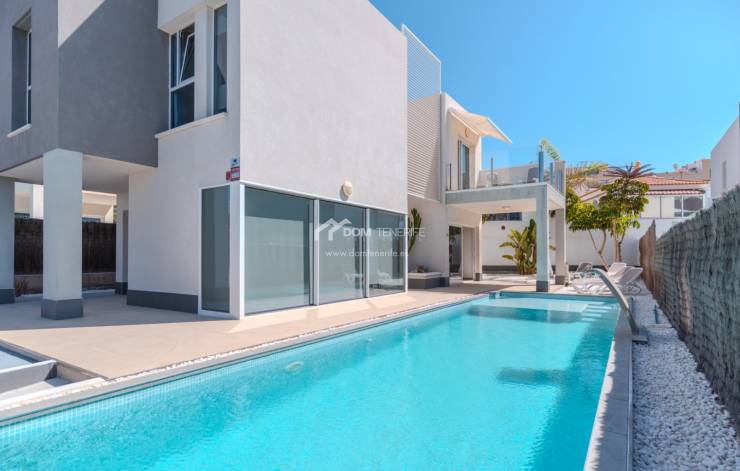
The three-bedroom villa has emerged as the most strategically positioned property type across Tenerife South, balancing acquisition cost, operational yield and end-buyer demand. This analysis examines the buyer profile, pricing evolution, legal structure and acquisition safeguards that define this segment.
High-net-worth buyers acquiring three-bedroom villas in Costa Adeje, El Duque and El Madroñal predominantly originate from Northern and Central Europe, the United Kingdom and Russia. These investors typically seek second homes or rental-income properties, with holding periods of five to ten years. Demand from Scandinavian and German buyers has remained consistent, whilst UK purchasers favour beachfront and golf-adjacent locations near Golf del Sur and Abama. Russian buyers concentrate on sea-view properties in El Duque and La Caleta. Market data indicates three-bedroom configurations command steady interest because they accommodate both family occupation and furnished-rental management without the complexity of four-bedroom estates. Price appreciation has tracked steadily upward over recent years, reflecting ongoing international interest and limited new construction in prime zones.
Discover the development in detail
Floor plans, specifications and current availability, sent by one of our advisors in your language.
See the developmentWhatsApp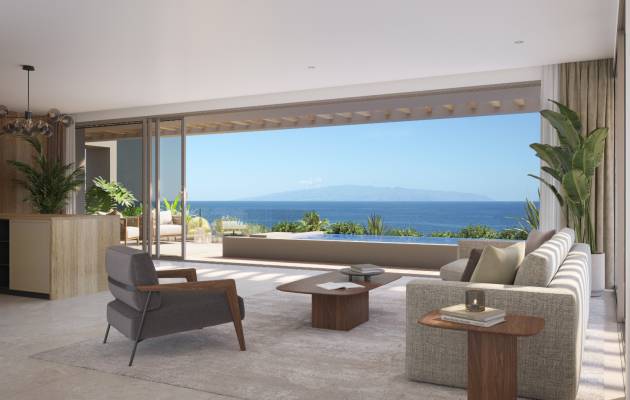
Waterfront villas with sea views command the highest valuations; a three-bedroom villa in El Duque or Bahía del Duque typically ranges significantly above standard pricing for comparable inland properties. Beachfront penthouses and first-line townhouses in Costa Adeje trade at a substantial premium, reflecting direct ocean access and sunset orientation. Second-line apartments—those within two to three street blocks of the coast—occupy the middle tier, offering reasonable acquisition costs while maintaining proximity to amenities. Exact pricing varies by specific location (El Madroñal villas command a premium over Playa Paraíso units), orientation, terrace size and community facilities. Transfer tax, notary fees and legal documentation will add approximately five to eight per cent to the purchase price. Current market conditions show steady demand with moderate inventory; buyers should request recent comparable transactions from their local agent to establish realistic expectations for their chosen micro-zone.
Every property purchase requires verification via the Catastro (Spanish land registry), which confirms exact plot size, built area, legal use classification and any encumbrances. A three-bedroom villa’s planning status—whether fully licensed, retrospectively regularised or subject to ongoing municipal scrutiny—fundamentally affects resale value and financing. Community of Owners (Comunidad de Propietarios) obligations must be inspected; these detail annual maintenance fees, reserve fund contributions and governance rules. Many Costa Adeje developments impose strict architectural guidelines and landscape maintenance requirements. Physical inspection must occur in daylight and again during evening hours to assess noise (proximity to bars in El Duque), traffic patterns and light exposure. Pool equipment, electrical panels, water pressure and drainage systems require functional verification; do not rely on marketing photographs. Request the building’s compliance certificate (Cédula de Habitabilidad) and any outstanding defects register (Libro de Incidencias).
Property acquisition in Spain triggers either ITP (Impuesto sobre Transmisiones Patrimoniales) on resale purchases or IVA (Value Added Tax) plus a separate property transfer tax on new-build sales. ITP rates vary by autonomous community; Canary Islands apply preferential rates under special tax regimes. Municipal property tax (IBI) is levied annually on the property’s registered value; amounts vary by location. Sellers who are non-resident in Spain face a three per cent income tax retention on the sale price, which buyers must withhold and remit to the tax authority. Municipal capital gains tax (plusvalía) is assessed when title transfers, calculated on the difference between the original purchase price and current sale value. Buyers must complete a modelo 211 tax certificate within thirty days of acquisition. These obligations require immediate engagement of a bilingual tax advisor and notary; delays in compliance trigger penalties and can block future resales.
Do not tender a deposit without a signed reservation agreement (contrato privado de reserva) specifying refund conditions, completion timeline and price. Never attempt independent document translation; notaries require certified legal translations by approved translators. Underestimating community charges or overlooking pending special assessments (cuotas extraordinarias) for building repairs or infrastructure upgrades is frequent; request three years of accounts. Ignoring property orientation—south-facing terraces in summer heat, north-facing units lacking daylight—leads to buyer regret in rental markets. Do not conduct viewings solely during daylight or ideal weather; return during rain to check for damp, at dusk to assess artificial lighting costs, and on weekends to gauge neighbourhood traffic. Accepting the seller’s word on legal status without independent registry checks has resulted in costly disputes. Assuming a quoted price includes all taxes and fees leads to financing shortfalls; always clarify whether quoted figures are exclusive or inclusive of transfer costs.
DOM Tenerife accompanies every buyer through complete legal and documentary verification: registry checks (Registro de Propiedad), tax authority clearance certificates, community account audits and structural compliance reviews. All documents are subject to certified translation into English by qualified legal translators recognised by Spanish courts. Notarial accompaniment ensures correct execution of the deed (escritura pública), identity confirmation and proper registration with the Land Registry (Registro de Propiedad). Post-acquisition, we manage NIE registration (foreigner tax identification), opening bank accounts, setting up direct debits for community fees and IBI, and coordinating with tax advisors for modelo 211 compliance. For buyers intending rental management, we provide supplier introductions (property managers, cleaners, maintenance contractors) and utility setup guidance. Our multilingual coordination eliminates translation disputes, regulatory surprises and administrative delays—transforming a complex acquisition into a structured, documented process.
High-net-worth individuals from Northern Europe, the UK and Russia dominate this segment, typically seeking second homes or rental investments with five- to ten-year holding periods. Scandinavian and German buyers favour golf-adjacent properties, whilst Russian purchasers concentrate on sea-view locations in El Duque and La Caleta.
Waterfront villas command premium valuations; first-line penthouses and beachfront properties trade significantly higher than second-line apartments. Exact pricing depends on location (El Madroñal versus Playa Paraíso), orientation, terrace size and community facilities. Transfer tax and legal fees typically add five to eight per cent to the purchase price.
Verify the Catastro entry for plot size and legal classification, the community of owners regulations and accounts, the planning permission status, and any outstanding municipal charges. Request the Cédula de Habitabilidad (building compliance certificate) and check the Land Registry for encumbrances or liens.
Resale purchases trigger ITP (Impuesto sobre Transmisiones Patrimoniales); new-build sales are subject to IVA and a separate property transfer tax. Annual IBI (property tax) applies to all owners. Non-resident sellers trigger a three per cent income tax retention. A modelo 211 tax certificate must be completed within thirty days of acquisition.
Never deposit funds without a signed reservation agreement; do not translate documents yourself; do not overlook community charges or special assessments; do not ignore property orientation or skip evening viewings; do not assume quoted prices include all taxes; do not skip independent legal registry verification.
We provide complete legal and documentary verification, certified translation of all contracts, notarial accompaniment, NIE registration, bank account setup and post-acquisition compliance management. Our multilingual coordination eliminates regulatory surprises and ensures full transparency from offer through final registration.
Acquiring a three-bedroom villa in Costa Adeje, El Madroñal or Abama demands meticulous legal verification and multilingual guidance. DOM Tenerife provides complete document authentication, certified translation, notarial supervision and post-acquisition compliance to ensure every purchase is safe, transparent and fully documented. Contact us via WhatsApp +34 673 560 035 to discuss your acquisition requirements.
Let’s talk whenever suits you
Video call, a meeting at our El Madroñal office, or WhatsApp on +34 673 560 035. We guide you from reservation to deed, in your language. DOM Tenerife — Buy safely.
Request informationMessage on WhatsApp#villa tres dormitorios costa adeje # tenerife luxury real estate # dom tenerife # south tenerife property # hnwi tenerife buyer
Phone
+34 922 089 199Mobile and whatsapp
+34 673 560 035
Address
Avenida Kurt Konrad Mayer 63, El Madroñal, 38660 Adeje, Santa Cruz de Tenerife, España.